
How to Match Motorized Ball Valves to Real-World Projects: A Scenario-Based Sizing and Selection Guide
How to Match Motorized Ball Valves to Real-World Projects
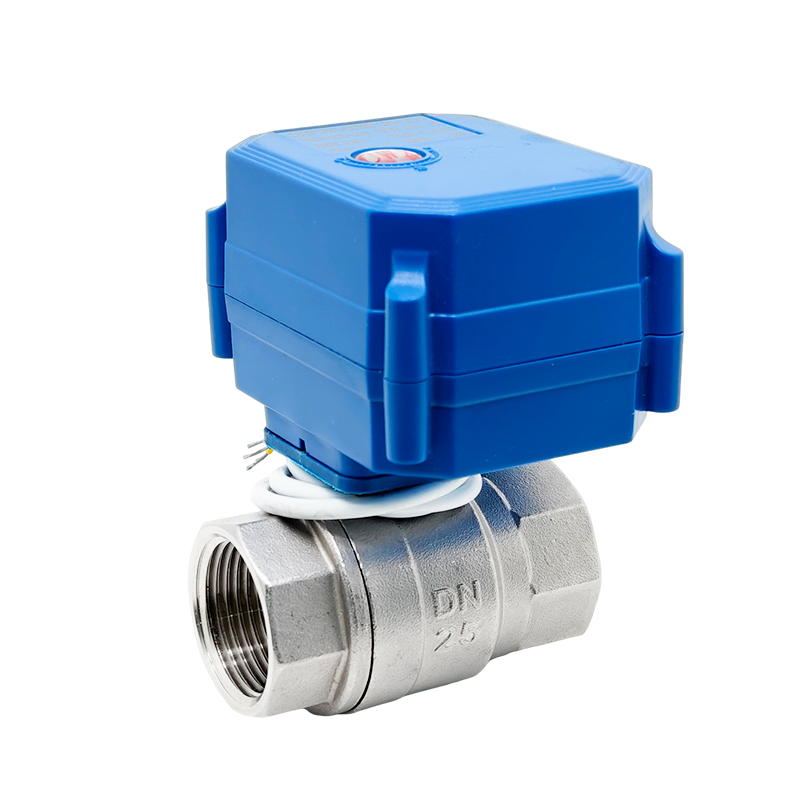
Choosing the right motorized ball valve is not only about voltage and pipe size; it is about how the valve must behave inside a specific system. A motorized ball valve that works well in a solar hot water loop may fail prematurely in a chemical dosing line or complicate commissioning in a municipal water pit. This guide explains how procurement and engineering teams can translate project conditions into a practical valve specification, with a focus on 2-way and 3-way motorized ball valves across HVAC, solar, industrial processing, smart home, and municipal applications.
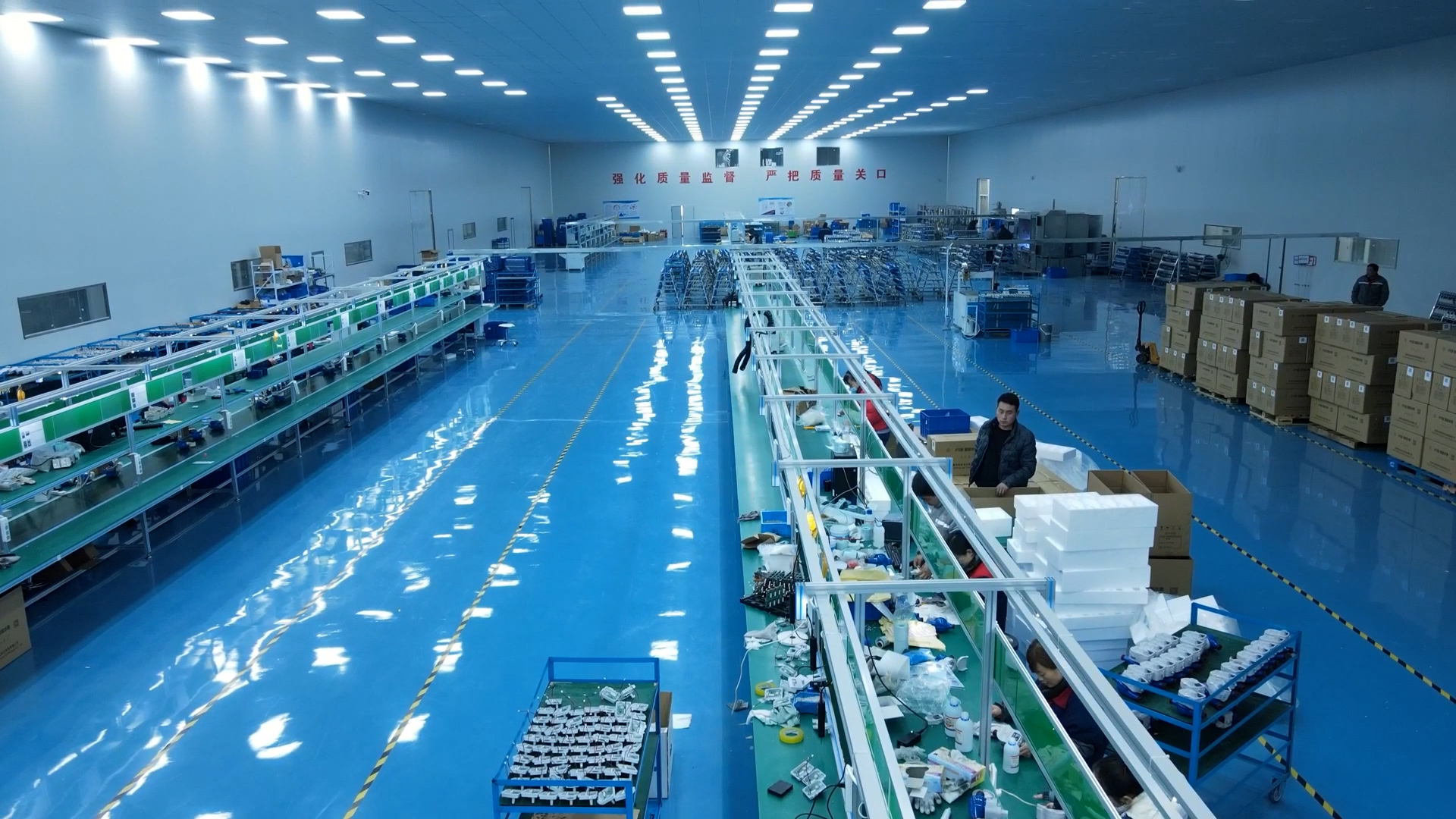
Tianjin Tianfei High-tech Co., Ltd. (Tianfei high-tech) is a Chinese manufacturer specializing in intelligent valves and metering instruments. Founded in 2009 and headquartered in Tianjin, the company operates a 30,000 m² production base with an annual output capacity of 1,000,000 units, and exports roughly 70% of its production to Europe, the Americas, Southeast Asia, and East Asia. Its motorized valve series includes compact stainless steel 2-way ball valves, high-torque modulating valves, 3-way mixing valves, PVC corrosion-resistant valves, large-bore stainless steel valves, and motorized butterfly valves. The examples in this article are based on Tianfei high-tech's published product specifications, with third-party market data labeled by source.
Why Scenario Fit Matters in Motorized Ball Valve Selection
Motorized ball valves are quarter-turn valves that use an electric actuator to rotate a ball with a bore through 90 degrees, allowing or stopping flow. They are widely used because they provide a tight shutoff, low flow resistance, and relatively fast operation. However, the same operating principle applies to very different products: a 3-watt compact valve for a household water line and a 20 N·m modulating valve for a central air conditioning system are both motorized ball valves, but they are not interchangeable.
In procurement practice, the most common errors are over-specifying torque, under-specifying enclosure protection, choosing the wrong port configuration, and ignoring the power and control environment. A scenario-based approach reduces these risks by starting with the system's functional requirements: what fluid, what pressure, what control signal, what installation environment, and what must happen during a power failure.
The global motorized ball valve market was valued at USD 8.7 billion in 2025 and is projected to reach USD 14.2 billion by 2034, according to Dataintelo. Two-way motorized ball valves hold the largest segment share at 42.1%. This explains why most manufacturers offer a deep range of 2-way valves in different materials, torques, and voltage options, while 3-way and specialty valves cover a smaller but critical set of mixing and switching applications.
Core Selection Criteria for Motorized Ball Valve Projects
Before comparing specific models, procurement teams should define the selection criteria that the valve must satisfy. The following five criteria apply to most projects involving electric ball valves.
1. Port Configuration: 2-Way vs. 3-Way vs. Butterfly
The first question is whether the system requires simple on/off isolation, mixing, diverting, or large-volume flow control.
- 2-way motorized ball valve: Used for on/off isolation or flow regulation in a single pipeline. Typical applications include HVAC water loops, solar hot water circulation, building automation systems, drinking water systems, and industrial fluid control.
- 3-way motorized ball valve: Used for mixing two inlets into one outlet or diverting one inlet into two outlets. A 3-way valve can replace a 2-way valve plus a bypass, simplifying piping. Typical applications include central air conditioning mixing, floor heating distribution, and industrial fluid switching.
- Motorized butterfly valve: Used for large-bore applications where a ball valve would be heavy or costly. Typical applications include municipal pipelines, large-bore HVAC, fire protection, and industrial piping from DN50 to DN500.
Tianfei high-tech's CWX-15N is a 2-way motorized ball valve available in AC220V, DC12V, and DC24V, covering DN15 to DN50 with 3 N·m torque, IP65 protection, and a working pressure of ≤1.0MPa. The CWX-60P is available in both 2-way and 3-way versions, with a 20 N·m motor, IP67 rating, and a pressure rating of ≤1.6MPa. The 3-way version supports both T-port and L-port configurations, meaning the same valve family can handle mixing and diverting duties.
2. Power Supply and Voltage Range
Valve actuators are typically specified for AC mains or DC control voltage. The wrong voltage specification causes the most avoidable site failures.
- AC220V: Standard for industrial and HVAC panels in many markets.
- DC12V / DC24V: Common in building automation, solar systems, and control cabinets where low-voltage operation is safer or more convenient.
- Wide voltage AC85-265V / DC9-24V: Useful for export products and equipment that may be installed in countries with different mains voltages.
For example, the CTF-001 operates on AC85-265V or DC9-24V, making it suitable for global export without changing models between 110V and 230V markets. The CWX-20P operates on AC220V or DC24V, making it a direct-fit option for solar PV systems using a DC24V panel supply.
3. Enclosure Rating and Installation Environment
IP rating determines the valve's resistance to dust and water ingress. Selecting an IP rating that does not match the environment is a common but serious mistake.
- IP54: Suitable for indoor smart home and kitchen/bath environments.
- IP65: Suitable for indoor industrial installations, plant rooms, and areas with moderate moisture or dust.
- IP67: Suitable for outdoor pits, wet environments, and temporary submersion. IP67 is recommended for municipal pits and harsh process areas.
The CWX-60P and CWX-25S both offer IP67 protection. The CTF-001 PVC valve offers IP65 with a corrosion-resistant PVC body. The WiFi Smart Water Valve offers IP54, which is appropriate for residential indoor installation rather than outdoor exposure.
4. Control Mode: On/Off, Normally Open/Closed, Modulating, and Failure Position
Different systems require different valve behavior during operation and during power loss.
- Normally Closed (NC): Valve closes when power is removed. This is fail-safe for leak protection, irrigation, and processes where flow must stop during a fault.
- Normally Open (NO): Valve opens when power is removed. This may be required for cooling water or ventilation systems where flow must continue.
- Stay/Hold: Valve preserves the last position during power loss. This prevents water hammer and is useful for mixing and balancing systems.
- Modulating: Valve can position the ball at intermediate openings using a control signal, usually 0-10V or 4-20mA. This is used for flow regulation and temperature control.
The CWX-15N supports NC, NO, and Hold modes, allowing the same valve to be configured for fail-open, fail-closed, or position-hold duty. The CWX-60P 2-way valve supports both On/Off and Modulating control via 0-10V or 4-20mA, which is important for BAS/BMS integration.
5. Torque and Working Pressure
Actuator torque must overcome the ball's friction and the differential pressure across the valve. An undersized actuator may stall or fail to seal. Working pressure defines the maximum static pressure the valve body and actuator can withstand.
- 3 N·m: Drives small ball valves from DN15 to DN50 in low-pressure water applications.
- 5 N·m: Covers DN20 to DN50 with a higher safety margin.
- 10 N·m: Drives larger stainless steel ball valves from DN25 to DN80.
- 20 N·m: Drives DN15 to DN100 ball valves and DN50 3-way mixing valves.
Working pressure is also material-dependent. The CWX-15N is rated ≤1.0MPa, while the CWX-15S, CWX-60P, and CWX-25S are rated ≤1.6MPa. The CTF-001 PVC valve is rated ≤0.8MPa. A project with a 1.2MPa static pressure should therefore specify a 1.6MPa-rated valve, not a compact 1.0MPa valve.
Scenario-by-Scenario Motorized Ball Valve Selection
The following scenarios show how the criteria above translate into concrete model choices. Each scenario includes the system, the critical requirement, and the relevant valve specification based on Tianfei high-tech's published data.
Scenario 1: HVAC and Building Automation Systems (BAS)
In commercial HVAC systems, motorized ball valves control chilled water or hot water flow to air handling units, fan coil units, or VAV boxes. These systems often require modulating control, because simple on/off control creates temperature oscillation.
The CWX-60P 2-way motorized ball valve is designed for central air conditioning, industrial refrigeration, HVAC, and energy management. It provides 20 N·m torque, covers DN15 to DN100, and supports both On/Off and Modulating modes with a 0-10V or 4-20mA control signal. Its IP67 rating is suitable for plant rooms where condensation and washdown are common.
Supporting equipment for this scenario includes an upstream differential bypass valve and pipe strainer, a downstream terminal coil, AHU FCU, or VAV box, and a control system such as DDC, a BA system, or a BMS platform. The signal cable should use shielded twisted pair RVVP 2×1.0mm² for analog anti-interference, and we recommend an independent 24VDC power module with signal isolation.
Buyer checklist for HVAC: Verify that the control signal matches the BAS protocol; confirm whether the valve should fail open or fail closed on power loss; check torque against DN100 ball diameter; and use a modulating valve, not an on/off valve, for temperature regulation.
Scenario 2: Floor Heating and 3-Way Mixing Systems
Underfloor heating requires mixing hot supply water with return water to maintain a consistent floor temperature. A 3-way motorized ball valve can replace a separate mixing valve plus bypass, reducing piping complexity.
The CWX-60P 3-way motorized ball valve operates in mixing or diverting mode, with a motor switching the ball between T-port and L-port configurations. It provides 20 N·m torque, covers DN15 to DN50, and carries an IP67 rating. The T-port configuration provides full flow or mixing, while the L-port configuration is for diverting or switching. Supporting equipment includes hot/cold water supply, a manifold, a circulation pump, and an underfloor coil, radiator, or mixing bypass. Control is typically provided by a room thermostat and manifold controller or a building automation system.
Buyer checklist for 3-way mixing: Confirm whether the system needs T-port mixing or L-port diverting; check the differential pressure and water temperature; and use a 20 N·m valve for DN50 3-way applications to avoid actuator stall.
Scenario 3: Solar Hot Water and Agricultural Irrigation
Solar hot water systems and irrigation systems often operate on low-voltage DC power, including direct connection to a PV panel. The valve must tolerate high temperatures in solar collector loops and, in many cases, conserve power during standby.
The CWX-20P motorized ball valve has a brass body and a 5 N·m medium-torque motor, covers DN20 to DN50, and operates on AC220V or DC24V. It supports NC/NO/Stay modes and is rated ≤1.0MPa. Its special requirements include solar PV DC24V direct compatibility for zero standby power and off-grid independent operation, a forged brass body resistant to dezincification, and resistance to 120°C high temperatures for safe solar collector circulation. For irrigation, supporting equipment includes a PP/copper mesh filter, a solar collector circulation pump, a check valve, an irrigation solenoid valve group, a mixing valve, a radiator, a solar controller, a rain sensor linkage, and a timer irrigator.
For smaller solar or drinking water applications, the CTF-001 compact stainless steel valve operates on AC85-265V or DC9-24V, which allows direct connection to solar DC supplies without a separate adapter.
Buyer checklist for solar: Confirm that the working voltage matches the solar panel output; check the maximum medium temperature; and specify a Stay/Hold mode if the valve must preserve its position during overnight power shutdown.
Scenario 4: Food, Beverage, Pharmaceutical, and Sanitary Processes
Sanitary applications require stainless steel wetted parts, low surface roughness, and materials that do not contaminate the process medium. The valve should be easy to clean and compatible with purified water, food products, or pharmaceutical media.
The CWX-15S is a 2-way motorized ball valve with a stainless steel body and 316SS ball, motor direct-drive 90° rotation, and NC/NO control modes. It covers DN15 to DN50 with 3 N·m torque, an IP65 rating, and a working pressure of ≤1.6MPa. It is used in food and beverage, pharmaceutical/chemical, purified water, and stainless steel piping systems. The full stainless steel construction provides resistance to chloride environments, making it suitable for desalination and marine-related piping.
The CWX-25S extends this capability to larger bores: DN25 to DN80 with 10 N·m torque, IP67 full seal, and a working pressure of ≤1.6MPa. It is designed for chemical, petroleum, pharmaceutical, desalination, and food processing applications. Supporting equipment for the CWX-25S includes a flanged strainer, pressure transmitter, and pipe compensator upstream; a pressure gauge, sampling port, and flow control valve downstream; and DCS, PLC, or HMI touchscreen control. Piping is typically DN25-80 flanged or welded, with 304/316SS companion flanges and PTFE/graphite gaskets recommended.
Buyer checklist for sanitary and chemical processes: Confirm wetted materials with the process engineer; check chloride concentration and temperature limits; verify pressure rating against system static and surge pressure; and specify IP67 when washdown is frequent.
Scenario 5: Acid, Alkali, and Chemical Piping
For hydrochloric acid, sulfuric acid, sodium hydroxide, and other corrosive media, metal-bodied valves may corrode quickly. A PVC motorized ball valve is often the lowest-risk choice for low-pressure chemical dosing and wastewater lines.
The CTF-001 PVC motorized ball valve uses a PVC body with a motor drive, providing acid and alkali corrosion resistance. It operates on AC85-265V or DC9-24V, covers DN15 to DN50, offers 3 N·m torque, IP65 protection, and a working pressure of ≤0.8MPa. Its PVC body tolerates HCl, H₂SO₄, and NaOH across a pH range of 2 to 13. Supporting equipment includes a corrosion-resistant filter, acid/alkali piping, a dosing pump, a metering pump, and a neutralization tank. Control is typically provided by a PLC dosing system, pH sensor linkage, or timer dosing controller.
Buyer checklist for corrosive media: Confirm the exact chemical concentration and temperature; verify that the valve body material is compatible with the full pH range; and use a corrosion-resistant filter upstream to protect the valve from particulates.
Scenario 6: Municipal Water Supply and Wastewater
Municipal projects require valves that can operate reliably in outdoor pits, resist flooding, provide manual override for maintenance, and interface with SCADA or PLC systems. Large-bore networks often use butterfly valves for cost and weight reasons.
The CTB motorized ball valve provides a motor-driven operation mode plus a manual override lever, allowing on-site manual open/close during power or controller failure without pipe disassembly. It covers DN15 to DN100 with 6 N·m torque, IP67 protection, and a working pressure of ≤1.6MPa. The IP67 rating and anti-rust coating support long-term outdoor municipal pit use. Municipal water certification is available, with WRAS/FDA versions optionally available.
For larger municipal lines, the CTB wafer-type motorized butterfly valve covers DN50 to DN300 with 20-200 N·m torque and supports On/Off and Modulating control via 4-20mA. The CTB flanged butterfly valve extends to DN500 with torque up to 500 N·m and is available in PN6/PN10/PN16 pressure ratings. Flanged butterfly valves are preferred for large bores and high pressures where wafer-style installation is insufficient.
Buyer checklist for municipal projects: Specify IP67 for pit installation; confirm whether the control signal is 4-20mA or dry contact; check the required pressure rating; and verify that the valve can be manually overridden for maintenance.
Scenario 7: Smart Home Water Leak Protection
Smart home water protection systems combine leak detection with automatic shutoff. The critical requirements are wireless connectivity, long battery standby, and fast response to prevent water damage.
The WiFi Smart Water Valve is a WiFi wireless motorized ball valve that operates on WiFi 2.4GHz and is powered by 4×AA batteries (DC6V) or USB DC5V. It covers DN15 to DN25, has an IP54 rating, and is made of SS304. Integration with the Tuya ecosystem, Alexa/Google Home voice control, in-app leak protection with auto-close valve and push alarm, OTA firmware upgrades, and a compact design that fits an 86mm electrical box are highlighted in the product's special requirements. The dual power design provides more than one year of battery standby with automatic switchover to USB power.
The WLAV (Water Leak Alarm Valve) is a linked alarm shutoff valve that integrates a conductive sensor, buzzer alarm, and motorized shutoff. It operates on DC12V, covers DN15 to DN25, and responds in less than 3 seconds from detection to shutoff. It includes buzzer and relay dual output, a customizable sensor cable from 1 to 5 meters, and a normally closed configuration that auto-closes on power failure.
Buyer checklist for smart home systems: Confirm the wireless protocol and hub compatibility; check whether the system requires local alarm, remote push, or both; and verify that the valve has a fail-safe position that protects the property during power loss.
Scenario 8: Large-Bore Industrial Flow Control
For DN80 and above, ball valves become heavy and expensive. A motorized butterfly valve is often the more practical choice for large pipelines, fire protection, and municipal networks.
The CWX-25S motorized ball valve covers the transition range from DN25 to DN80 with 10 N·m torque and IP67 protection. For larger bores, the CTB motorized butterfly valve covers DN50 to DN300 with 20-200 N·m torque, and the CTB flanged butterfly valve covers DN50 to DN500 with 30-500 N·m torque. These products support both On/Off and Modulating control, with the wafer-type suitable for space-constrained installations and the flanged type preferred for high-pressure or high-cycling systems.
Buyer checklist for large-bore systems: Compare the cost and weight of ball valves versus butterfly valves at the required bore; confirm the flange standard and pressure class; and check actuator torque against the valve diameter and system differential pressure.
Comparison Table: Tianfei Motorized Valve Series at a Glance
| Model | Type | Size | Voltage | Torque | Control | IP Rating | Pressure | Typical Applications |
|---|---|---|---|---|---|---|---|---|
| CWX-15N | 2-Way Motorized Ball Valve | DN15–DN50 | AC220V / DC12V / DC24V | 3 N·m | NC / NO / Hold | IP65 | ≤1.0MPa | HVAC, BAS, floor heating, hot water circulation |
| CWX-15S | 2-Way Motorized Ball Valve (SS) | DN15–DN50 | AC220V / DC24V | 3 N·m | NC / NO | IP65 | ≤1.6MPa | Food & beverage, pharma/chemical, purified water |
| CWX-20P | 2-Way Motorized Ball Valve (Brass) | DN20–DN50 | AC220V / DC24V | 5 N·m | NC / NO / Hold | IP65 | ≤1.0MPa | HVAC, solar hot water, agricultural irrigation |
| CWX-25S | 2-Way Motorized Ball Valve (Large Bore, SS) | DN25–DN80 | AC220V / DC24V | 10 N·m | NC / NO | IP67 | ≤1.6MPa | Chemical, petroleum, pharma, desalination, food processing |
| CWX-60P (2-Way) | 2-Way Motorized Ball Valve (High Torque) | DN15–DN100 | AC220V / DC24V | 20 N·m | Modulating (0-10V / 4-20mA) / On-Off | IP67 | ≤1.6MPa | Central A/C, industrial refrigeration, HVAC, energy management |
| CWX-60P (3-Way) | 3-Way Motorized Ball Valve (T/L Port) | DN15–DN50 | AC220V / DC24V | 20 N·m | T/L Port Switching | IP67 | ≤1.6MPa | Central A/C mixing, floor heating distribution, fluid switching |
| CTF-001 | 2-Way Motorized Ball Valve (Compact SS) | DN15–DN50 | AC85-265V / DC9-24V | 3 N·m | NC / NO / Hold | IP65 | ≤1.0MPa | Drinking water, food sanitation, BAS, solar systems |
| CTF-001 PVC | 2-Way Motorized Ball Valve (PVC) | DN15–DN50 | AC85-265V / DC9-24V | 3 N·m | NC / NO | IP65 | ≤0.8MPa | Acid/alkali media, pools, chemical piping, wastewater |
| CTB Ball | 2-Way Motorized Ball Valve (Manual Override) | DN15–DN100 | AC220V / DC24V | 6 N·m | On/Off & Modulating (Optional) | IP67 | ≤1.6MPa | BAS, industrial fluid control, HVAC, municipal water |
| CTB Wafer Butterfly | Wafer-Type Motorized Butterfly Valve | DN50–DN300 | AC220V / DC24V | 20–200 N·m | On/Off & Modulating (4-20mA) | IP67 | ≤1.6MPa | Municipal pipelines, industrial piping, large HVAC, fire protection |
| CTB Flange Butterfly | Flanged Motorized Butterfly Valve | DN50–DN500 | AC220V / DC24V | 30–500 N·m | On/Off & Modulating | IP67 | ≤1.6MPa | Municipal water/wastewater, power plant cooling, marine |
| WiFi Water Valve | WiFi Wireless Motorized Ball Valve | DN15–DN25 | DC6V (4×AA) / DC5V USB | — | WiFi / Tuya / Alexa / Google Home | IP54 | — | Smart home water control, leak protection, garden irrigation |
| WLAV | Linked Alarm Shut-Off Valve | DN15–DN25 | DC12V | — | Conductive Sensing + Buzzer + Relay | IP44 | — | Home/office leak protection, server room subfloor |
Note: Torque and pressure values are based on Tianfei high-tech published specifications. The WiFi Water Valve and WLAV do not publish torque values; they are application-specific smart shutoff devices.
Step-by-Step Selection Workflow
The following seven steps provide a practical workflow for matching a motorized ball valve to a project.
- Define the system function. Determine whether the valve must isolate, regulate, mix, or divert flow. This defines valve type: 2-way, 3-way, or butterfly.
- List the medium and operating conditions. Record the fluid type, temperature, pressure, pH, chloride concentration, and whether the medium is potable, sanitary, or corrosive.
- Select the body material. Brass for general water and HVAC; stainless steel for sanitary, chemical, and marine; PVC for acid/alkali media; cast iron or stainless steel for large butterfly valves.
- Determine bore size and torque. Match the valve DN to the pipeline size. Select actuator torque that covers the valve diameter and system pressure with margin.
- Define control and failure behavior. Choose NC, NO, or Hold based on what the system must do during a power failure. Choose On/Off or Modulating based on the control strategy.
- Match power supply and enclosure rating. Verify voltage, available power, and IP rating according to the installation environment.
- Check supporting equipment and interface. Confirm upstream filters, downstream flow meters, control panels, signal cables, flanges, and gaskets are compatible with the selected valve.
This workflow can be used as a procurement checklist to compare quotes from different manufacturers using the same technical criteria.
Evidence from a Large-Scale Municipal Project
To show how this selection logic scales to real projects, Tianfei high-tech published a customer case for a large European municipal water group in France. The customer commissioned the system in November 2024, and the order for 10,000 units was signed in November 2024 and delivered within three months. The application covers on/off control and flow regulation for municipal water supply and drainage networks, sewage treatment plants, and smart water automation systems.
According to the published case, the customer inspected the factory in October 2024 and approved the production and quality control system. Tianfei provided on-site installation guidance, commissioning training, and remote technical support. Reported achievements include 4-20mA regulation with response time ≤0.5s, flow control error below ±2%, zero leakage and zero major failures in 16 months of operation, maintenance cost reduction of 40%, and annual energy savings of more than 120,000 kWh. The case also states that the project achieved a 25% lower price and 40% shorter delivery time compared with international peers.
This case is relevant to procurement teams because it demonstrates a complete supplier workflow: factory audit, production approval, large-volume delivery, on-site support, and long-term remote service. For a scenario-based selection, it also confirms that 4-20mA modulation and remote fault diagnosis are practical requirements for municipal smart water projects.
Frequently Asked Questions
What is a motorized ball valve used for?
A motorized ball valve uses an electric actuator to rotate a ball through 90 degrees, opening or closing a pipeline. It is used for on/off isolation and flow regulation in water, HVAC, solar, industrial, and smart home systems. In the global motorized ball valve market, 2-way motorized ball valves hold the largest segment share at 42.1%, according to Dataintelo.
How do I choose between a 2-way and a 3-way motorized ball valve?
Use a 2-way motorized ball valve when the system requires simple on/off isolation or regulation in one pipeline. Use a 3-way motorized ball valve when the system must mix two inlet flows into one outlet or divert one inlet flow into two outlets. A 3-way valve can replace a 2-way valve plus a bypass, simplifying piping. For example, the CWX-60P 3-way valve supports both T-port mixing and L-port diverting configurations.
What does IP65 or IP67 mean for a motorized ball valve?
IP stands for Ingress Protection. IP65 means the valve is dust-tight and protected against water jets. IP67 means the valve is dust-tight and protected against temporary submersion in water. For indoor plant rooms and most HVAC applications, IP65 is often sufficient. For outdoor municipal pits, wet process areas, and frequent washdown environments, IP67 is recommended.
What is the difference between a 12V and 24V motorized ball valve?
The voltage refers to the actuator's power supply. A motorized ball valve 12V is typically used in control cabinets and smaller automation systems, while a motorized ball valve 24V is common in building automation, solar systems, and industrial control panels. Some models, such as the CTF-001 with AC85-265V / DC9-24V, accept a wide voltage range and can be used across different power systems without changing models.
Which motorized valve is suitable for outdoor or harsh environments?
For outdoor municipal pits, chemical plants, and other harsh environments, specify a motorized ball valve with IP67 protection, a corrosion-resistant body material, and, where possible, a manual override lever. The CTB motorized ball valve includes both motorized and manual override operation, with IP67 and anti-rust coating. For large outdoor systems, the CTB motorized butterfly valve is designed for municipal pipelines, large-bore HVAC, and fire protection systems.
Conclusion
Matching a motorized ball valve to a project begins with the system's functional requirements, not with a single product parameter. Port configuration, voltage, IP rating, control mode, torque, working pressure, and wetted materials should be defined by the application, the medium, the control strategy, and the installation environment.
For 2-way isolation and regulation, product families like the CWX-15N, CWX-15S, CWX-20P, and CWX-60P cover compact HVAC, sanitary, solar, and high-torque modulating duties. For mixing and diverting, the CWX-60P 3-way valve is a single solution for T-port and L-port systems. For corrosive media, the CTF-001 PVC valve addresses acid and alkali piping. For municipal and large-bore networks, the CTB ball valve and butterfly valve series provide IP67 protection, manual override, and optional modulating control. For smart home leak protection, the WiFi Smart Water Valve and WLAV bring wireless control and fast detection to residential water systems.
Project engineers and procurement teams can use the comparison table and selection workflow in this article to structure their next RFQ, supplier conversation, or internal design review. When the project profile has been defined, a manufacturer can respond with a more accurate model match, faster quoting, and fewer site changes.

Need help selecting a motorized ball valve for your project? Tianfei high-tech supports OEM customization of voltage and logo, with a monthly capacity of 8,000 units and lead time of 30 days. You can request a sample or quote by contacting Mrs Wang at tf.co@tfjt.com or via WhatsApp at +86 18920338351.
Have Questions or Need More Details?
Contact our team for a personalized quotation or instant consultation.
Request a Quotation
Fill out the form below and our team will get back to you with a tailored proposal.
WhatsApp Direct Chat
Prefer to chat in real-time? Message us on WhatsApp for instant assistance & quick answers.
- Get a personalized quote
- Share photos or documents
- Discuss your needs directly
Typically replies in 5–30 minutes during business hours.