
Motorized Ball Valve Explained: Core Concepts, Types, and Smart Applications

Precision machining at the Tianjin Tianfei High-tech Co. production base, where motorized valve components are manufactured.
A motorized ball valve is a quarter-turn valve in which an electric actuator rotates a drilled ball inside the valve body to start, stop, or redirect flow. Where a manual ball valve depends on a handle turned by hand, a motorized unit can be operated from a wall switch, a control panel, a timer, or a smart-home app. That single change — removing the human hand from the quarter-turn — is why one product family now appears in factory process lines, building water risers, and household leak-protection kits.
This explainer is written for engineers, purchasers, and importers who are new to the category. It covers the vocabulary a buyer needs first, the practical difference between 2-way and 3-way configurations, the power and control options that decide whether a valve can be called smart (including WiFi 2.4GHz, battery and USB supply, and Tuya/SmartLife integration), and where motorized butterfly and temperature control valves fit in the same installation. Products from Tianjin Tianfei High-tech Co., such as the CWX-60p motorized ball valve and the CTF-001 temperature control valve, are used as concrete examples throughout.
Core Concepts: The Four Parts That Matter
A motorized ball valve is best understood as four functional blocks, and almost every buying decision maps back to one of them.
- The valve body and the ball. The body carries the flow and the pipe connection; the ball is the rotating element with a bore through it. When the bore aligns with the pipe, the valve is open. At 90 degrees, it is closed.
- The seat and sealing system. Polymer seats — PTFE-based materials are a common choice in general water service — press against the ball to hold the seal. Seat design, more often than motor size, decides whether a valve stays leak-free over thousands of cycles.
- The actuator. This is the assembly that replaces the handle: a small electric motor, a gear train that multiplies torque, and a control board that reads the command. Gear material is a genuine differentiator. The Tianfei High-Tech CWX-15N, for example, uses a metal and POM composite gear set rather than an all-metal train.
- The control and feedback layer. This is where smart behaviour is created: how the valve is powered, how it receives commands, how it reports position, and what it does when power is lost. The CWX-15N is designed to power off at position, a logic that protects the motor from stalling and burnout.
Two more terms appear on almost every specification sheet. DN (nominal diameter) describes the pipe size the valve is built for, and IP rating describes how well the actuator housing resists dust and water. An IP65 rating means protection against dust and water jets; IP67 adds short-term immersion protection. Both ratings appear in the CWX-15N specification.
The scale of the simplest configuration is worth noting. Two-way motorized ball valves hold the largest segment share within the motorized valve market at 42.1%, according to Dataintelo's 2025 market data. The most basic version of the product is still the most widely deployed one.
Problem Definition: When Isolation Depends on a Person
Manual isolation valves work only when someone is present to turn them. The events they are meant to prevent — water leakage, frozen pipe bursts, appliance leaks, hidden drips, pipe network bursts, and water wastage — usually begin when nobody is on site: overnight, during a holiday shutdown, or on an unoccupied floor of a building.
A motorized ball valve changes the sequence of events. Instead of reacting to damage, the system can close a line while the event is still small. The control methods used to achieve this are well established: remote monitoring, remote one-touch switching, ultrasonic micro-leak detection, water immersion sensor linkage, and automatic or remote shut-off.
Tianfei High-Tech designs its intelligent ball valve solutions around this set of risks. In that architecture the valve is the final actuator in a monitoring chain, and it is the control logic — not the valve alone — that decides whether a small leak becomes a flooded floor.
Industry Background: Why Demand Is Shifting
Motorized ball valves are no longer a niche industrial component. The global motorized ball valve market was valued at USD 8.7 billion in 2025 and is projected to reach USD 14.2 billion by 2034, according to Dataintelo. Asia Pacific dominated that market in 2025 with a 38.5% revenue share, and China's position as a supply base is well documented: the country exported USD 22.6 billion in valves in 2024, holding a 20% global export share, per the Observatory of Economic Complexity.
The fastest-moving sub-segment is connected hardware. The Insight Partners projects the IoT valve market will reach USD 2.85 billion by 2031, growing at a CAGR of 10.4% from 2023. That shift is visible in the product mix buyers now see quoted side by side: WiFi smart valves, IoT smart valves, and app-linked smart electric valves, in the same RFQs as conventional on/off units.
Regulation is the second background force. Motorized valves sold into the EU market must comply with CE marking under EN 60335-1 and with RoHS 2.0 under IEC 62321. For a first-time buyer, that means the specification conversation usually includes a compliance document, not only a size and a voltage.
2-Way and 3-Way Motorized Ball Valves: Choosing by Function
Configuration is a function decision, not a price decision. A 2-way motorized ball valve has two ports and does one job: it opens or closes a line. It is the correct choice for isolation, on/off control, and shut-off logic, which is consistent with the 2-way type holding the largest share of the market.
A 3-way electric ball valve has three ports. Instead of stopping flow, it sends flow somewhere else, or blends two streams into one. Three-way valves are used for changeover between sources, bypass around equipment, and simple mixing loops. In procurement documents, "3-way motorized ball valve" and "electric 3 way valve" describe the same component.
A decision rule that works for new buyers: if the answer to "what happens when this valve closes?" is "flow stops", specify 2-way. If the answer is "flow goes somewhere else", specify 3-way. Getting this wrong at the specification stage costs far more than any difference in unit price, because a diverting application cannot be built from an on/off valve.
Power and Control Options: 12V, 24V, 120V, Battery/USB, and WiFi 2.4GHz

Surface-mount (SMT) production of control boards — the first documented process step in Tianfei High-Tech's motorized valve production flow.
Voltage is the first filter. Common classes in this category include DC supplies such as 12V and 24V, and AC supplies such as 120V. DC versions suit low-voltage and battery-backed control systems; AC versions suit installations where mains power is already available at the valve. Wide voltage compatibility is a practical feature for distributors, because one stocked item can then serve several project voltages — the CWX-15N is designed with wide voltage compatibility for that reason.
The second filter is how the valve is powered when mains wiring is inconvenient. Battery and USB-powered actuators allow a valve to be retrofitted where running a cable is impractical. The trade-off is maintenance: batteries require a replacement schedule, while wired units do not carry that service requirement.
The third filter is the control layer. Wired control remains the default in industrial installations. Wireless control — WiFi 2.4GHz actuators working within Tuya/SmartLife app ecosystems — is what turns a valve into a consumer-facing smart device, and it is the layer that allows a WiFi smart valve or IoT smart valve to be scheduled, monitored, and operated remotely. The limitation is dependency: wireless control requires a stable network, and the valve's usefulness is tied to the platform it is paired with.
On the electronics side, these products are board-driven. Tianfei High-Tech builds the control boards in-house; SMT is the first step in the company's documented production flow, followed by machining, injection molding, assembly, destructive testing, and warehouse logistics.
Where Butterfly and Temperature Control Valves Fit
Not every installation should use a ball valve. A motorized butterfly valve uses a rotating disc instead of a bored ball, and it is normally chosen for larger line sizes and higher flows, where a ball valve would become heavy and expensive to actuate. The engineering logic is straightforward: ball valves for tight shut-off and smaller lines, butterfly valves for volume and larger diameters.
A temperature control valve solves a different problem. Rather than opening or closing fully, it adjusts flow to hold a temperature — the component at the end of a heating or cooling loop. Tianfei High-Tech's CTF-001 sits in this part of the range, while the CWX-60p is a motorized ball valve from the same manufacturer.
Many real projects combine all three. A building water system may use a motorized ball valve at the main isolation point, butterfly valves on large risers, and a temperature control valve on the hot-water loop. Buying them from one supplier is a convenience rather than a technical requirement, but it does simplify compliance documentation and spare-part planning.
A Closer Look at the Manufacturer: Tianjin Tianfei High-tech Co.
Tianjin Tianfei High-tech Co. was established on March 16, 2009, and is a national high-tech enterprise under Tianjin Jinfeng Technology Investment Group. Headquartered in Tianjin, it is a founding member of China's micro electric valve industry, specializing in the R&D, manufacturing, and sales of high-end intelligent valves and metering instruments for intelligent energy management and control.
The production footprint behind those products is a 30,000 m² base with an annual output capacity of 1,000,000 units, a workforce of around 100 people, and an R&D team of 10 engineers. Roughly 70% of output is exported, mainly to Europe and America, South America, Central America, Southeast Asia, and East Asia.
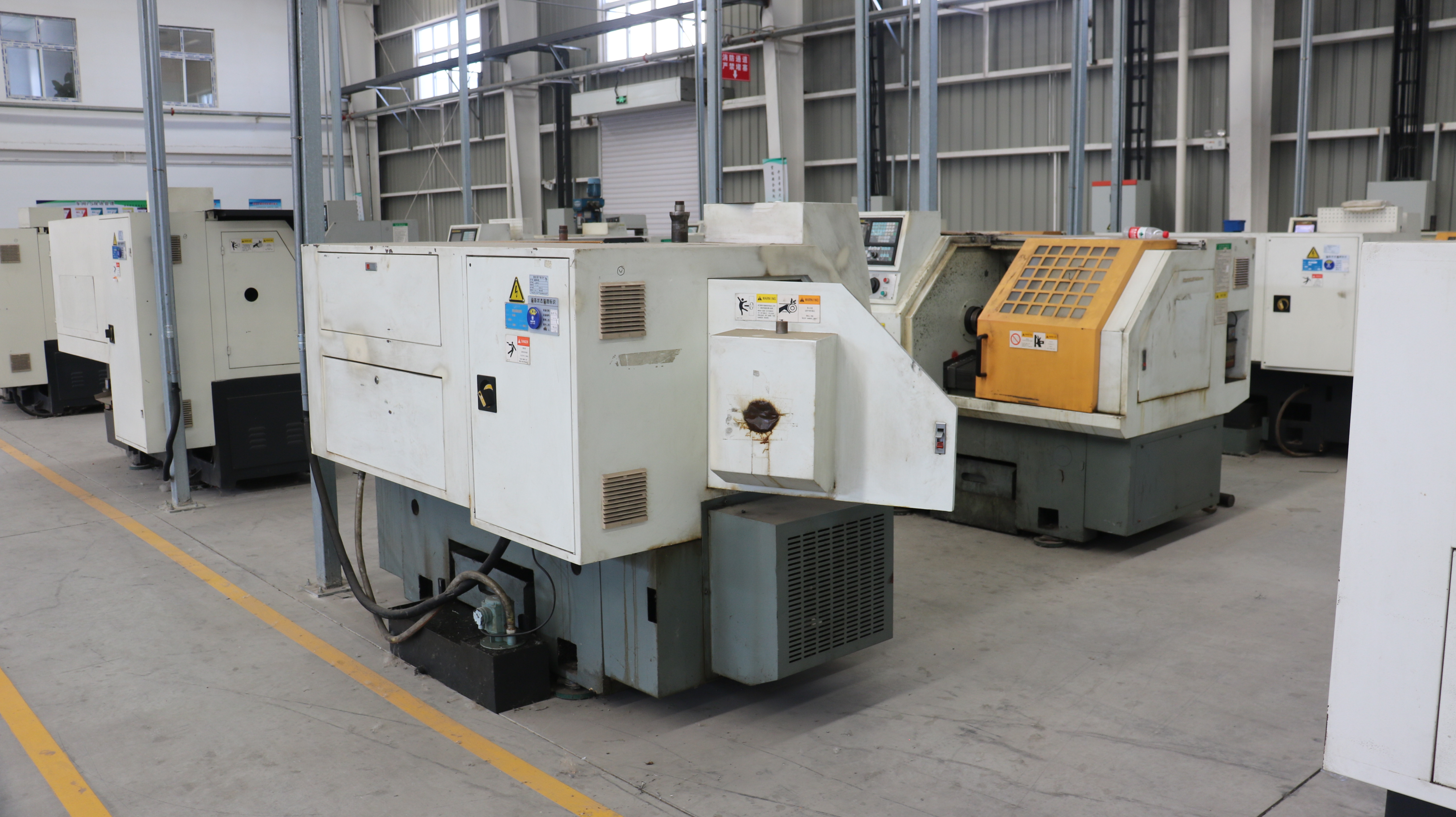
Small-scale machining equipment used in motorized valve component production at Tianfei High-Tech.
The CWX-15N is the model most often used to explain the company's design choices. Its metal and POM composite gear set is intended to reduce operating noise, with a documented noise advantage of 3 dB versus a metal-gear equivalent. It is designed to power off at position to prevent motor burnout, supports multi-angle installation with maintenance access, and is specified for low power consumption and a high energy efficiency ratio. It covers DN8 to DN32, carries an IP65/IP67 rating, and offers wide voltage compatibility. Tianfei High-Tech states that, compared to the mainstream domestic competitor's CWX-15N motorized ball valve, this product has distinct advantages — differences that sit mainly in gear composition, noise, and protection rating rather than in basic function. The trade-off is cost: the same specification carries a premium of roughly 5% to 10%.
Step-by-Step: How to Specify a Motorized Ball Valve
- Define the function. Isolation or diverting. This single answer determines whether the project needs a 2-way or a 3-way valve, and everything else follows from it.
- Fix the line size and connection. Port size is expressed as DN. The CWX-15N covers DN8 to DN32; larger lines generally move to a butterfly valve rather than a bigger actuator on the same body.
- Choose the power layer. 12V DC, 24V DC, 120V AC, or battery and USB supply for retrofit locations. Note the service implication of each choice.
- Choose the control layer. A wired switch, timer, or building controller, or a wireless WiFi 2.4GHz unit paired with a Tuya/SmartLife ecosystem for scheduling and remote operation.
- Confirm the environment. Protection rating (IP65 or IP67), the media being handled, ambient temperature, freezing risk, and whether the valve is indoors or exposed.
- Check compliance for the destination market. For the EU, that means CE marking under EN 60335-1 and RoHS 2.0 under IEC 62321.
- Validate before volume. Test a sample on the points that matter in service: gear material, position logic, cycle behaviour, and installation angles.
Step 7 is the step most first-time buyers skip. Destructive testing is part of Tianfei High-Tech's documented production flow, which makes it a reasonable verification topic to raise with any supplier: ask what is tested, how often, and what record the buyer receives.
Smart Applications: Four Scenarios Buyers Ask About Most
- Smart home leak protection. The valve is linked to water immersion sensors and can shut the incoming line automatically. Related control options include ultrasonic micro-leak detection and remote one-touch shut-off.
- Garden irrigation. A WiFi 2.4GHz or battery-powered valve allows scheduled watering and remote override, which reduces water wastage from a supply left running.
- Building and facility water management. Remote monitoring and abnormal early warning let a facilities team see a hidden drip before it becomes a pipe network burst; automatic shut-off limits the damage.
- Temperature-controlled loops. A temperature control valve such as the CTF-001 regulates flow to hold a set temperature, while motorized ball valves isolate the loop for maintenance.
Limits matter as much as capabilities. Sensor-linked protection only works if the sensor is placed where water actually collects. Battery-powered valves need a maintenance schedule. Wireless valves need a network. Buyers who plan for those three constraints get more value from the same hardware.
Comparison Table: CWX-15N vs a Mainstream Domestic Alternative
The table below compares publicly stated specification points for two products that carry the same model designation. Because the model number is shared, buyers should confirm gear material, protection rating, and voltage options directly with each supplier before ordering.
| Specification point | Tianfei High-Tech CWX-15N | Mainstream domestic CWX-15N (Chuanhu) | Buyer implication |
|---|---|---|---|
| Gear train | Metal + POM composite gears | Metal gears | The composite gear set is the source of the noise difference |
| Noise | 3 dB lower than a metal-gear equivalent | Reference point (metal gear) | Relevant for indoor residential and hospitality projects |
| Protection rating | IP65/IP67 | IP65 | IP67 adds short-term immersion protection in wet locations |
| Position logic | Power-off at position | Not stated in the reference data | Affects motor burnout risk in continuous-duty installations |
| Voltage | Wide voltage compatibility | Not stated in the reference data | Wide-range units reduce the number of SKUs a distributor must stock |
| Size coverage | DN8–DN32 | Same-size version available | Both target small and mid-size lines rather than large mains |
| Relative cost (same specification) | +5% to +10% | Reference point | The premium buys quieter operation and a wider protection rating |
| Energy characteristics | Low power consumption, high energy efficiency ratio | Not stated in the reference data | Matters in battery-backed and large multi-valve systems |
FAQ
Do motorized ball valves sold in the EU need CE marking and RoHS compliance?
Yes. Motorized valves placed on the EU market must comply with CE marking under EN 60335-1 and with RoHS 2.0 under IEC 62321. In practice this means a declaration of conformity and the supporting test documentation should be requested during supplier evaluation, not after delivery.
What power and control options should a buyer check first?
Check voltage class, power source, and control method, in that order. Common voltage classes include 12V DC, 24V DC, and 120V AC, and the CWX-15N is built with wide voltage compatibility so one model can serve several project voltages. Power can come from mains wiring, or from battery and USB supply where cabling is impractical. Control can be wired or wireless; wireless units typically operate over WiFi 2.4GHz and pair with Tuya/SmartLife ecosystems for scheduling and remote operation.
Does a quieter, composite-gear motorized ball valve cost more?
Usually yes. The CWX-15N, which uses metal and POM composite gears, carries a cost premium of roughly 5% to 10% for the same specification compared with the mainstream domestic metal-gear version. What that premium buys is a documented 3 dB noise reduction, low power consumption, and a high energy efficiency ratio. The decision should follow the installation: indoor residential and hospitality projects are usually noise-sensitive, while remote plant rooms usually are not.
How can a buyer validate a motorized ball valve before a volume order?
Request samples and test the points that matter in service: gear material, protection rating, power-off-at-position logic, cycle behaviour, and installation angles. Ask whether the factory performs destructive testing as part of its documented production flow, and request the compliance documents for the destination market at the same time. A sample request is normally the cheapest form of risk reduction available at this stage.
What supply capability should be verified before committing to a delivery schedule?
Verify production capacity and export experience. Tianjin Tianfei High-tech Co. operates a 30,000 m² production base with an annual output capacity of 1,000,000 units and exports roughly 70% of its output, mainly to Europe and America, South America, Central America, Southeast Asia, and East Asia. Buyers can request a sample or quotation for the CWX-60p, CWX-15N, or CTF-001 by emailing tf.co@tfjt.com, calling +86 022 85685296, or messaging WhatsApp +86 18920338351; the product range is listed at www.minimotorizedvalve.com.
Conclusion and Next Step
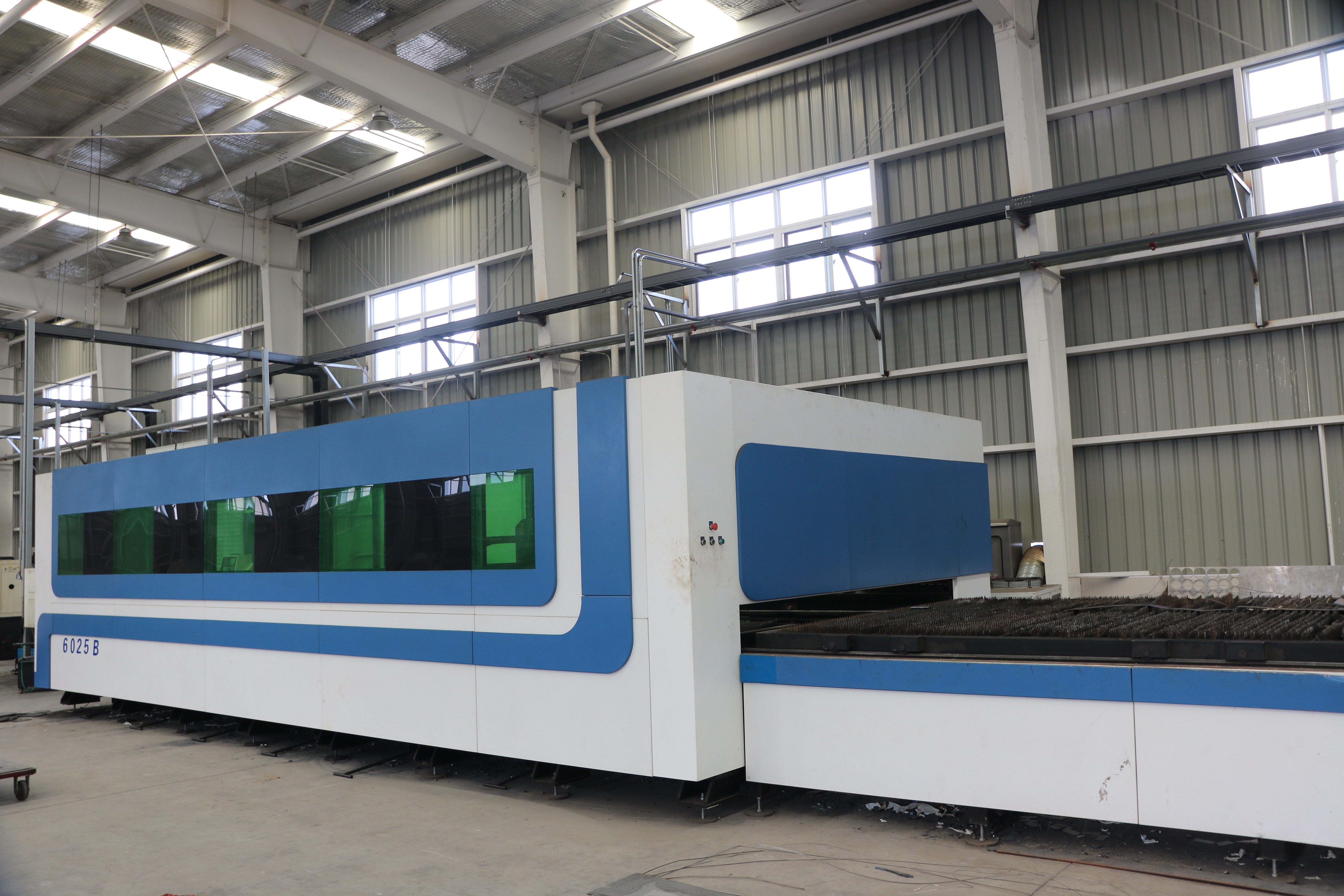
Laser cutting is one of the in-house fabrication capabilities supporting motorized valve production at Tianjin Tianfei High-tech Co.
The category becomes simple once the sequence is clear. A motorized ball valve is an electric actuator driving a quarter-turn ball; configuration decides whether it isolates or diverts; voltage and control method decide how it is operated; protection rating and compliance decide where it can legally and safely be installed. Everything else — gear material, noise, energy characteristics, cost premium — is a trade-off to be weighed against the specific application.
For a buyer at the decision stage, the practical next step is to fix the function and port size, then validate the shortlisted product with a sample and the compliance documents for the destination market. Tianjin Tianfei High-tech Co. supplies the CWX-60p and CWX-15N motorized ball valves and the CTF-001 temperature control valve, and can be reached at www.minimotorizedvalve.com, by email at tf.co@tfjt.com, by telephone at +86 022 85685296, or by WhatsApp at +86 18920338351.
Have Questions or Need More Details?
Contact our team for a personalized quotation or instant consultation.
Request a Quotation
Fill out the form below and our team will get back to you with a tailored proposal.
WhatsApp Direct Chat
Prefer to chat in real-time? Message us on WhatsApp for instant assistance & quick answers.
- Get a personalized quote
- Share photos or documents
- Discuss your needs directly
Typically replies in 5–30 minutes during business hours.