
When a Pipe Bursts While You're Away: A Motorized Ball Valve Leak-Protection Blueprint
Short answer: a motorized ball valve leak-protection system pairs wired or wireless water-leak sensors with a WiFi smart water valve — also catalogued as a water leak alarm valve — mounted on the incoming main. When a sensor detects water, the controller sounds a local buzzer, pushes an alert to the Tuya Smart or SmartLife app, and drives the valve closed in under 3 seconds. The assembly runs on 4×AA batteries with more than one year of standby, switches automatically to USB DC5V when external power is available, and is placed at the home main valve, in kitchen and bathroom pipe zones, or under a server room subfloor. Alexa and Google Home voice control is supported.
What Unattended Water Damage Actually Looks Like
A building rarely floods because of one dramatic failure. It floods because a small number of ordinary failure modes continue unchecked while nobody is on site. In leak-protection planning those modes are grouped as water leakage, frozen pipe bursts, appliance leaks, hidden drips, pipe network bursts and water wastage.
Each mode defeats a different part of a manual response:
- Hidden drips. A fitting under a sink or behind a washing machine releases water slowly. Nothing looks wrong from the doorway, and the first visible symptom is usually a stain on the ceiling below.
- Appliance leaks. Supply hoses and inlet valves at dishwashers, washing machines and water heaters fail at their connection points — often between tenancies, overnight, or over a holiday shutdown.
- Frozen pipe bursts. In unheated or poorly insulated sections, water expands as it freezes and splits the pipe wall. The release happens at thaw, which is exactly when a building is most likely to be empty.
- Pipe network bursts. A riser or main-line failure releases a high volume quickly and is the case where automatic shut-off matters most.
- Water wastage. A running toilet or weeping joint that never triggers an emergency can still dominate a building's water consumption month after month.
The damage window matters more than the leak size
The critical variable in water damage is not how fast water escapes but how long it is allowed to escape. A slow drip that runs for ten hours reaches the same structural elements as a faster leak that runs for twenty minutes. In an attended building the response window closes quickly because someone is present. In an unattended building the response window is defined entirely by the next time a person walks through the door.
Why attendance-based protection keeps failing
Property managers cannot be on site at 3 a.m. Landlords have no reliable presence between tenancies. Facility teams cover a defined shift, not a calendar. The result is a structural gap: the people responsible for a building are almost never present during the hours when the highest-consequence failures occur. Any protection design therefore has to close the response gap automatically rather than through a better inspection checklist.
Why Leak Protection Is Moving From Mechanical to Smart
The hardware layer of leak protection is changing faster than the plumbing layer. According to The Insight Partners, the IoT valve market is projected to reach USD 2.85 billion by 2031, growing at a CAGR of 10.4% from 2023. Dataintelo values the global motorized ball valve market at USD 8.7 billion in 2025, with a projected reach of USD 14.2 billion by 2034, and reports that two-way motorized ball valves hold the largest segment share within that market at 42.1%. Asia Pacific accounted for a 38.5% revenue share of the motorized ball valve market in 2025.
The supply side is equally concentrated. OEC data shows China exported USD 22.6 billion in total valves in 2024, maintaining a 20% global export share. In the final-control segment, Mordor Intelligence identifies Emerson Electric Co. as a global market leader in the final control and smart valve segment.
Two conclusions follow for anyone specifying a leak-protection system today. First, the shut-off device is no longer a passive accessory — it is a networked control point, and IoT smart valve architectures are the fastest-growing part of the category. Second, because two-way motorized ball valves dominate the segment, the two-way design is the safe default for a main-line shut-off, with three-way electric ball valves reserved for zone isolation.
Compliance context for smart valves
For the EU market, motorized valves must comply with CE marking under EN 60335-1 and with RoHS 2.0 under IEC 62321. Because a WiFi smart water valve combines a motorized ball valve body with control electronics, the compliance framework applies to the assembly, not only to the mechanical part. Buyers specifying hardware for European buildings should confirm both documents before installation and file them with the building's maintenance records.
The manufacturer behind this blueprint
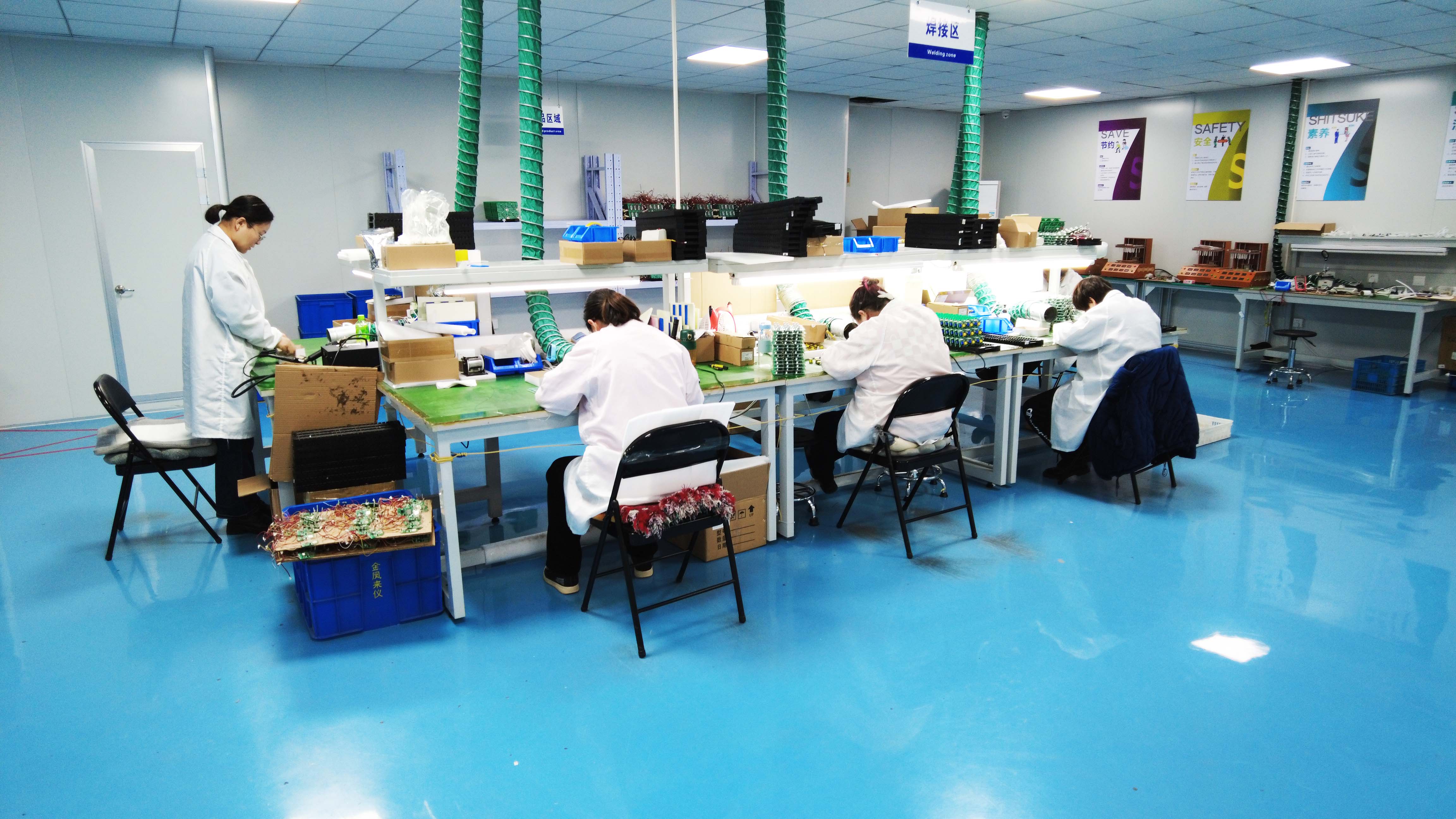
Tianjin Tianfei High-tech Co., Ltd. is a Tianjin-based national high-tech enterprise, established on March 16, 2009, under Tianjin Jinfeng Technology Investment Group, and a founding member of China's micro electric valve industry. The company develops, manufactures and sells high-end intelligent valves and metering instruments for intelligent energy management and control. It operates a 30,000 m² production base, employs an R&D team of 10 engineers, and exports roughly 70% of its output to markets across Europe and the Americas, South America, Central America, Southeast Asia and East Asia.
The Blueprint: Detection, Decision, Shut-Off, Control
A reliable leak-protection system is built in four layers. Skipping any one of them leaves a gap that the other three cannot compensate for.
Layer 1 — Detection
Detection is the sensing layer, and it has three practical options. Water immersion sensors are linked to the controller and trigger when water physically bridges their contacts — the standard choice for floor-level and cabinet-level protection. Ultrasonic micro-leak detection targets the small, continuous losses that never reach a floor sensor, which is useful for water-wastage control rather than emergency shut-off. Sensor topology is the second decision: wired sensors suit permanent risers and new-build containment, while wireless sensors suit retrofits where running cable through finished walls is impractical. Wired systems are simpler to keep powered; wireless systems are simpler to deploy at scale in existing buildings.
Layer 2 — The shut-off device
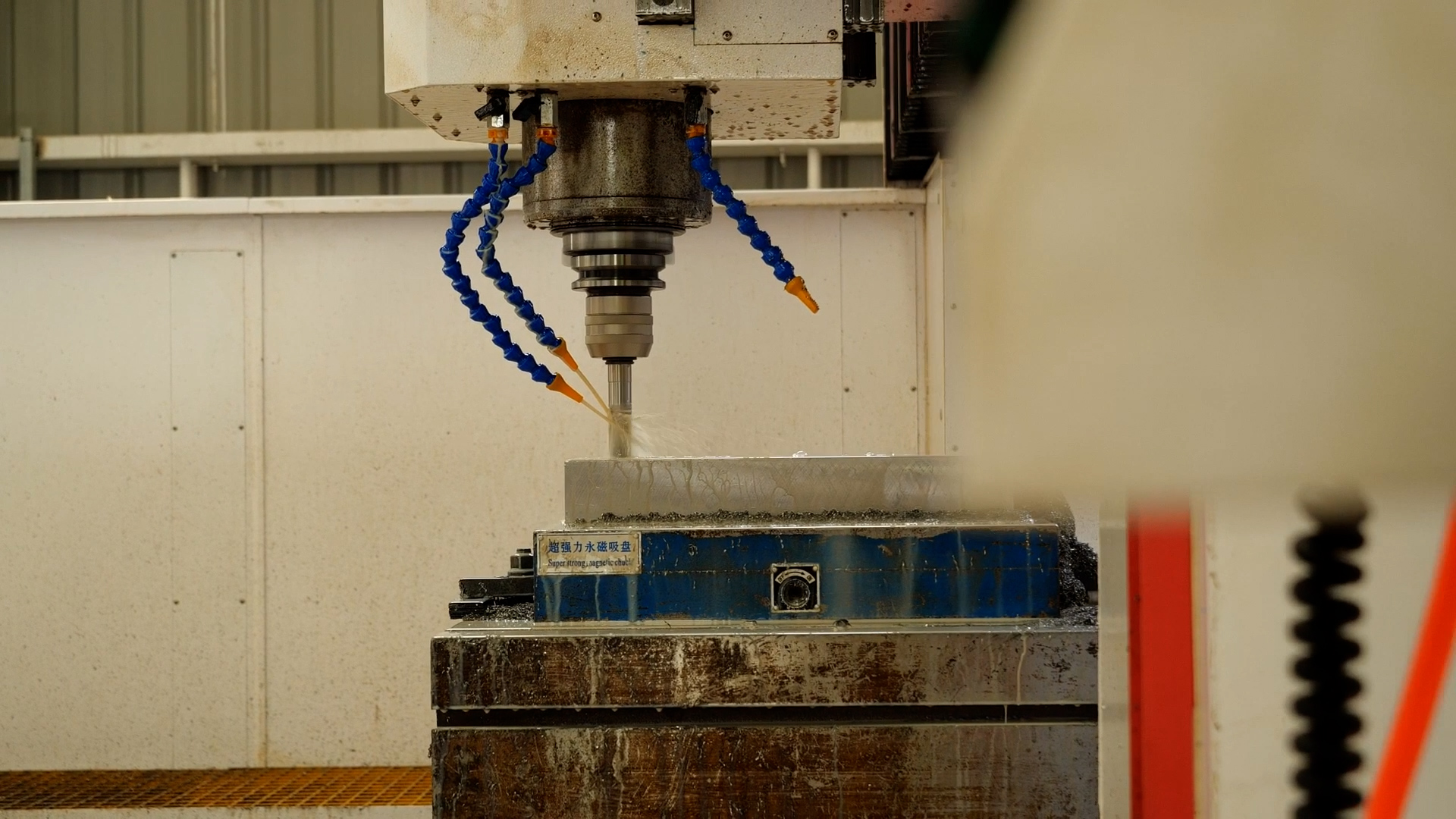
The shut-off device is where a smart motorized valve earns its place over a manual valve. A quarter-turn electric ball valve is the preferred body type for leak protection for three reasons: it is full-bore, so it does not restrict normal flow; it needs only a quarter turn to change state, so closing is fast; and it holds its position without continuous power, which is what makes battery operation possible at all.
In a leak-protection duty cycle, the valve is normally a 2-way motorized ball valve installed on the incoming main. Where one supply line feeds two zones that must be isolated independently, a 3-way motorized ball valve or electric 3-way valve diverts flow instead of simply stopping it. Where mains exceed the practical range of a ball valve body, building services sometimes specify a motorized butterfly valve; the protection logic remains identical — sense, alert, close.
On the Tianfei platform, the CWX-15N covers DN8–DN32, which is the working range for most residential and light commercial mains and branch lines. A DN20 motorized ball valve is the common size for apartment branch shut-off, while a 2 inch motorized ball valve sits outside the CWX-15N range and requires a different body size. The CWX-15N uses metal plus POM composite gears, is rated IP65/67, and supports wide voltage compatibility, so projects standardised on 12 V, 24 V or 120 V control circuits can use the same valve family. The POM gear variant measured 3 dB quieter than the metal-gear baseline in the same size.
Layer 3 — Power and fail-safe behaviour
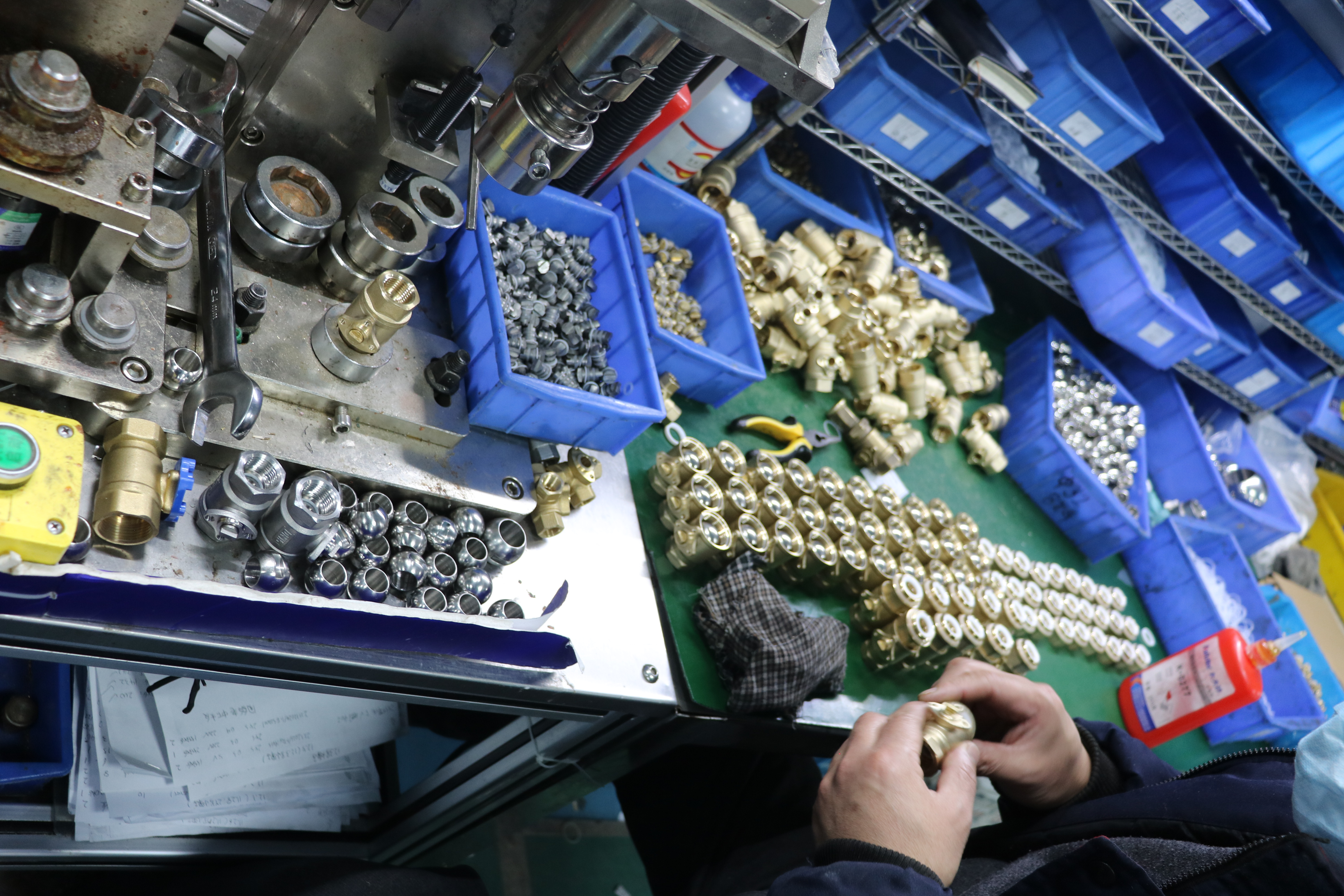
Leak protection has to survive the exact conditions that cause leaks in the first place, including power interruptions. The battery configuration in this design uses 4×AA cells with more than one year of standby, and the controller switches automatically to USB DC5V when external power is present. That combination covers the two common cases: a building with a nearby outlet, and a valve pit, riser or void with no wiring at all.
The actuator is designed to power off at position. This prevents burnout by ensuring the motor is not held against a hard stop, and it means the valve keeps its last state through a power loss instead of drifting open. Multi-angle installation is supported, which matters in real risers where the pipe run rarely offers a convenient orientation. For maintenance, the same design principle keeps field service simple: the valve can be inspected or replaced without rebuilding the surrounding control logic.
Layer 4 — Control surfaces
Three control surfaces matter in practice. The Tuya Smart or SmartLife app provides remote monitoring, alarm history and remote one-touch switching, so a manager can close or reopen the main from a phone rather than a van. Voice control via Alexa and Google Home gives hands-free operation during an on-site walkthrough. The local buzzer is the layer that works when nobody is looking at a phone — a technician in the plant room, a cleaner on site, or a neighbour investigating a noise.
Together these cover the four control methods used in this class of equipment: remote monitoring, remote one-touch switching, automatic or remote shut-off, and abnormal early warning.
Where to Place Sensors and the Valve
Home main valve
The main valve is the single highest-value installation point, because closing one valve protects the whole downstream network. Mount the motorized ball valve directly after the incoming main shut-off, keep the manual valve upstream as a service bypass, and place at least one immersion sensor in the same low point as the valve so a failure at the fitting itself is detected.
Kitchen and bathroom pipe zones
These are the zones where appliance leaks and hidden drips concentrate. Sensors belong inside the sink cabinet, behind or beneath the dishwasher, adjacent to the washing machine supply, and near the water heater inlet. In bathrooms, the priority points are under the basin, behind the toilet cistern and at the bath or shower mixer access panel. Treat these as detection zones, not shut-off zones — the close action should still happen upstream at the main.
Server room subfloor
A raised-floor server room combines three risks that rarely appear together elsewhere: continuous occupancy expectations, high-value contents, and chilled-water or condensate lines running under the floor. Place immersion sensors at the lowest points of the subfloor void and at the entry and exit of any chilled-water run, and place the shut-off valve on the branch that feeds the room rather than the whole building, so a single zone can be isolated without cutting water to the site.

Step-by-Step: Building the System
- Map the water entry and wet-risk zones. Identify the incoming main, every branch that feeds a wet area, and the lowest point in each zone. This map determines how many sensors you need before any hardware is ordered.
- Choose the valve size and type. Use a DN20 motorized ball valve for apartment branch shut-off and the DN8–DN32 CWX-15N range for standard mains. Use a 2-way valve where flow simply stops; use a 3-way electric ball valve where one supply must be diverted between two zones.
- Confirm the power arrangement. Choose 4×AA battery with USB DC5V auto-switch where there is no reliable wiring, or match the wide voltage compatibility of the platform to the building's existing 12 V, 24 V or 120 V control circuits.
- Decide wired versus wireless detection. Wired for permanent risers and new-build containment; wireless for retrofits in finished buildings where cable routing is the dominant cost.
- Install the valve and sensors. Fit the valve after the manual main shut-off, verify multi-angle mounting suits the pipe run, and place sensors at the identified low points, including one adjacent to the valve itself.
- Link detection to action. Pair each sensor with the controller and confirm the linkage chain: sensor triggered → buzzer sounds → push alert delivered → valve closed.
- Configure the app and voice layer. Add the valve to Tuya Smart or SmartLife, set alarm notifications, and link the account to Alexa or Google Home for hands-free operation.
- Test the fail-safe path, then schedule checks. Time the close cycle, confirm the valve reports closed in the app, cut the DC supply to confirm battery behaviour, and log the pre-shipment test result with the installation record. Thereafter, verify sensors and battery state on a fixed seasonal schedule.
Design note: acceptance for this class of equipment is defined by pre-shipment testing rather than by site guesswork. Testing the full chain — sense, alert, close — before handover is what turns a hardware purchase into a working protection system.
Use Cases
1. A rental unit standing empty between tenancies
The empty week between tenants is the highest-risk period in a rental property's annual cycle: the building is unoccupied, but the water is still on. A main-line WiFi smart water valve plus cabinet-level sensors in the kitchen and bathroom converts that week from an unmonitored exposure into a monitored one. The landlord can also close and reopen the main remotely between viewings without travelling to the property.
2. A multi-building portfolio
For property managers running several sites, the value is not in any single valve but in the alert stream. A push notification identifies which building triggered, and remote one-touch switching allows the manager to close the affected main before dispatching anyone. This is the operational difference between responding to a leak and responding to a report of a leak.
3. A small server room or IDF closet
Subfloor immersion sensors combined with a dedicated branch valve allow the room to be isolated without shutting down water to the rest of the building. The same logic applies to any high-value, low-occupancy space with chilled-water or condensate lines nearby.
4. Cold-climate seasonal shutdown
Where a building or wing is closed for the winter, frozen pipe bursts are the dominant risk. A valve that holds its position without power, plus battery standby of more than one year, allows the main to be closed remotely for the shutdown period and reopened remotely before reoccupation.
5. After-hours food service and laundry
Commercial kitchens and laundries combine appliance leaks, hidden drips and water wastage in a single space, and both operate outside normal facility hours. Zone-level detection with an upstream shut-off protects the operation without requiring a permanent presence.
Comparison Table: Options in a Leak-Protection Loop
| Option | Role in a leak-protection loop | Documented specification facts | Typical fit |
|---|---|---|---|
| Tianfei High-tech CWX-15N 2-way motorized ball valve | Main-line automatic shut-off at the incoming supply | Metal + POM composite gears; power-off at position; IP65/67; wide voltage compatibility | DN8–DN32 residential and light commercial mains and branches |
| 3-way electric ball valve / 3-way motorized ball valve | Zone isolation and flow diversion between two pipe legs | Two-way motorized ball valves hold the largest segment share within the motorized valve market at 42.1% (Dataintelo) | Buildings where one supply line feeds two independently protected zones |
| Chuanhu CWX-15N (mainstream domestic alternative) | Main-line automatic shut-off at the incoming supply | Metal gears; IP65; basic same-size version | Comparable footprint where a quieter gear set is not a requirement |
| Emerson Electric Co. | Final-control and smart valve segment | Identified by Mordor Intelligence as a global market leader in the final control and smart valve segment | Large industrial and process installations |
Two differences are worth stating plainly because they affect specification rather than marketing. The POM composite gear version of the CWX-15N measured 3 dB quieter than the metal-gear baseline in the same size, and carries a cost difference of 5%–10% for the same specification. Both figures come from documented comparison data rather than field estimates.
Designing for the Long Run: Spares, Service and Repeat Supply
A leak-protection rollout is a lifecycle commitment, not a one-off purchase. Sensors get contaminated, actuators age, and buildings add zones. The practical planning rules are simple: order valve and sensor units in the same production lot so spares match the installed generation; keep at least one spare actuator per site; and standardise on one valve family and one app ecosystem across a portfolio so that maintenance knowledge transfers between buildings.
Supply capacity supports that approach. Production runs at a monthly capacity of 8,000 units with a typical lead time of 30 days, and OEM production runs carry a minimum order quantity of 2 units. For portfolios, the useful discipline is to treat the leak-protection system as a maintained building service with its own record: installation map, test results, battery replacement dates and sensor cleaning schedule.
FAQ
Do WiFi smart water valves for leak protection need CE or RoHS compliance in the EU?
Yes. For the EU market, motorized valves must comply with CE marking under EN 60335-1 and with RoHS 2.0 under IEC 62321. Because a WiFi smart water valve combines a motorized ball valve body with control electronics, the compliance framework applies to the assembly as a whole rather than to the mechanical part alone. Buyers specifying leak-protection hardware for European buildings should obtain both documents before installation and keep them with the building's maintenance records.
How fast does the valve close after a leak is detected, and what happens if mains power fails?
When a linked water immersion sensor detects water, the WiFi smart water valve drives the ball valve closed in under 3 seconds, while the controller sounds a local buzzer and pushes an alert to the Tuya Smart or SmartLife app. The assembly runs on 4×AA batteries with more than one year of standby and switches automatically to USB DC5V when external power is available. The actuator powers off at position to prevent burnout, so the motor is not held against a hard stop, and multi-angle installation is supported.
What drives the cost of a smart leak-protection setup?
Cost follows five variables rather than a single price: valve size, valve type, gear material, power or voltage variant, and the number of detection points. The CWX-15N covers DN8–DN32; a DN20 motorized ball valve is typical for apartment branch shut-off, while a 2 inch motorized ball valve sits outside that body range. A 3-way electric ball valve for zone isolation costs more than a 2-way equivalent. The POM composite gear version of the CWX-15N carries a 5%–10% cost difference for the same specification compared with the metal-gear baseline, in exchange for 3 dB lower noise. Standard purchasing terms list an MOQ of 1 unit, FOB or CIF delivery, pre-shipment testing as the acceptance criterion, and 50/50 payment terms.
Can I validate a sample before rolling this out across a portfolio?
Yes. Standard purchasing terms support an MOQ of 1 unit, and the acceptance criterion is a pre-shipment test. A practical validation covers three checks on site: trigger the sensor and time the close cycle, confirm that both the buzzer and the app push alert fire, and interrupt the DC supply to confirm battery behaviour and the power-off-at-position design. OEM production runs are quoted separately, with a minimum order quantity of 2 units.
What lead time and capacity should a multi-building rollout plan for?
Production runs at a monthly capacity of 8,000 units with a typical lead time of 30 days, and OEM production runs carry a minimum order quantity of 2 units. For portfolios, the practical planning rule is to order valve and sensor units together in one batch so that spare actuators and replacement sensors come from the same production lot. Tianjin Tianfei High-tech supplies these assemblies with roughly 70% of output going to markets across Europe and the Americas, South America, Central America, Southeast Asia and East Asia. To request a sample or discuss a portfolio-sized order, contact tf.co@tfjt.com or WhatsApp +86 18920338351.
Conclusion
Unattended water damage is a timing problem, not a plumbing problem. The building is fine until a pipe fails, and the loss is defined by how long water keeps flowing afterwards. A motorized ball valve leak-protection system closes that window automatically: sensors watch the wet-risk zones, a WiFi smart water valve on the incoming main closes in under 3 seconds, and the Tuya Smart or SmartLife app plus Alexa or Google Home keep a manager in control from anywhere.
The installation decisions that matter are unglamorous but decisive — one valve on the main, one sensor at the lowest point of each wet zone, battery standby of more than one year with USB DC5V auto-switch, and a full chain test at handover. Get those four right, and a burst pipe while you are away becomes an alert on a phone instead of a claim on a building.
Next Step

Validate the design on your own building before committing a portfolio to it. Request a sample, a specification sheet or a quotation for a specific DN size and power variant.
Email: tf.co@tfjt.com | WhatsApp: +86 18920338351 | Web: www.minimotorizedvalve.com
Tianjin Tianfei High-tech Co., Ltd. — 16 Rongyuan Road, Nankai District, Tianjin, China. Tel: +86 022 85685296.
Have Questions or Need More Details?
Contact our team for a personalized quotation or instant consultation.
Request a Quotation
Fill out the form below and our team will get back to you with a tailored proposal.
WhatsApp Direct Chat
Prefer to chat in real-time? Message us on WhatsApp for instant assistance & quick answers.
- Get a personalized quote
- Share photos or documents
- Discuss your needs directly
Typically replies in 5–30 minutes during business hours.