
Protecting Server Rooms and Data Centers with Wired Water Leak Detection Systems
Application Guide for Critical Facilities
Server rooms and data centers are not usually taken offline by water itself. They are taken offline by water that nobody noticed until it reached a live busbar, a cable tray, or a subfloor junction box. A chilled-water riser that weeps slowly under a raised floor, a condensate drain that backs up above a switchgear cabinet, or a humidifier supply line that loosens overnight can all produce damage long before anyone walks the room with a flashlight.
This guide is written for facility engineers, MEP consultants, data center operators, and electrical room managers who are evaluating leak protection for the first time. It explains how a wired water leak detection system works, how its NO/NC relay output connects to a BMS or DCS, how sensor cable reach determines coverage, and how the detection signal can be used to close an external motorized ball valve so that a detected leak is not only reported but physically stopped.
What Problem Does Water Leak Detection Actually Solve in a Server Room?
A water leak detection system is a continuous monitoring layer that watches defined zones for the physical presence of water and converts that event into an electrical signal that a building management system can act on. It is not a maintenance tool and it is not a substitute for good drainage design. Its job is to shorten the interval between the moment water appears and the moment someone — or some system — responds.
In a critical facility, that interval is the entire risk. Water sources inside or above a server room are rarely exotic. They include chilled-water piping and risers, CRAH and CRAC condensate drains, humidifier supply and drain lines, roof or above-floor drainage that passes over the room, fire sprinkler and pre-action piping, and potable water lines routed for domestic use or for building services that happen to cross the space.
Once water enters the room, the damage mechanisms stack up quickly: insulation resistance drops in energized conductors, cable trays and busways corrode, subfloor grounding grids degrade, humidity spikes and promotes mold in cable pathways, and structural fixings weaken over repeated wet-dry cycles. Most of these effects are cumulative and many are invisible from the aisle.
Manual inspection is periodic; leaks are continuous
The gap that detection closes is a timing gap. A scheduled walkthrough happens at intervals. A leak does not. A conductive sensor sits in the risk zone and evaluates the condition continuously, which means the first notification arrives at the moment water bridges the sensing electrodes rather than at the next inspection round.
Detection alone is not protection
There is an important distinction between detecting a leak and stopping one. A detection-only device tells you there is water. A closed-loop arrangement — detection plus an automatic shutoff valve — reduces the volume of water that enters the room after the event begins. For data centers, electrical rooms, and subfloor voids, the closed-loop version is usually the configuration that actually protects the asset.
Why Leak Protection Is Becoming a Design Requirement, Not an Accessory
Two structural trends are pushing leak detection from a nice-to-have into a design line item. The first is that water-based cooling remains central to how high-density compute is managed, which means water-carrying infrastructure continues to sit inside and above the spaces that must never get wet. The second is that the control hardware at the end of that infrastructure is becoming networked, self-monitoring, and remotely operable — which makes automatic isolation practical rather than theoretical.
The market data reflects that shift. The IoT valve market is projected to reach USD 2.85 billion by 2031, growing at a CAGR of 10.4% from 2023, according to The Insight Partners. Dataintelo values the global motorized ball valve market at USD 8.7 billion in 2025, projected to reach USD 14.2 billion by 2034, with Asia Pacific holding a 38.5% revenue share in 2025. Within that market, two-way motorized ball valves hold the largest segment share at 42.1%.
Supply is equally mature. China exported USD 22.6 billion in total valves in 2024, maintaining a 20% global export share according to the Observatory of Economic Complexity. In the final control and smart valve segment, Mordor Intelligence identifies Emerson Electric Co. as a global market leader, which indicates how consolidated the high end of the category has become.
Compliance expectations are also tightening. On the EU market, motorized valves must comply with CE marking under EN 60335-1 and RoHS 2.0 under IEC 62321. These requirements apply to the powered actuator that performs the shutoff, not to the passive sensing element, and that distinction matters when you write a specification.
How a Wired Leak Detection System Works in a Critical Environment
Wired detection remains the preferred architecture for data centers, electrical rooms, and other high-consequence spaces because it is simple, it is not dependent on wireless signal quality inside a metal-clad room, and its output can be wired directly into the control system that already governs the facility.
1. The conductive sensing principle
Conductive leak detection uses a pair of sensing electrodes separated by an insulating gap. Dry, the gap is open and the circuit is idle. When water bridges the electrodes, the conductivity of the water closes the circuit and the sensor registers a leak event. There is no calibration routine, no optical window to fog up, and no moving part in the sensing path.
The practical consequence is that conductive sensing works best where water will physically reach the sensing element — floors, subfloor voids, drip trays, bunded areas, low points of pipe runs, and the perimeters of equipment skids. It is a contact method, so placement is a design decision rather than a product decision.
2. NO/NC relay output and BMS/DCS integration
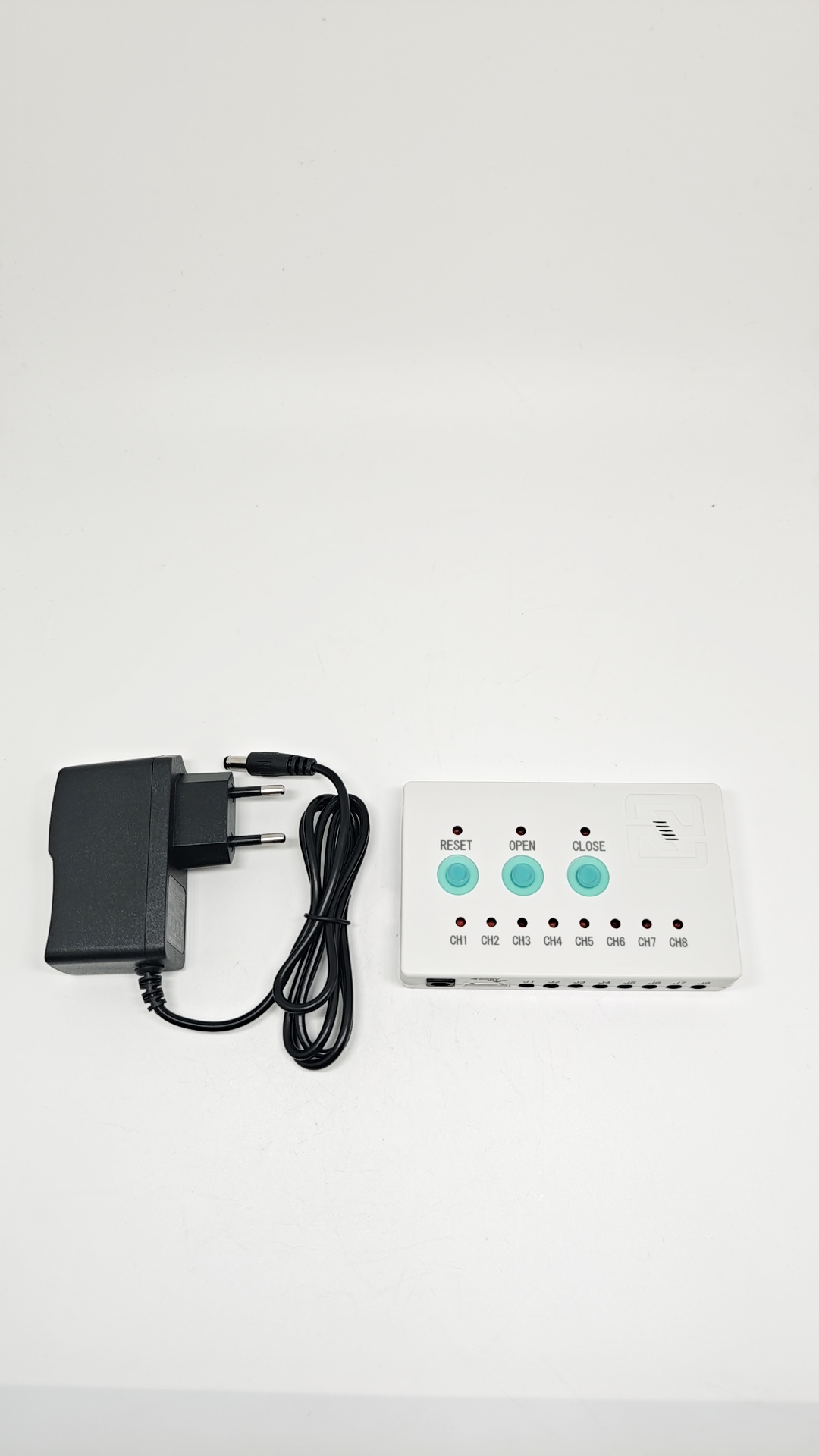
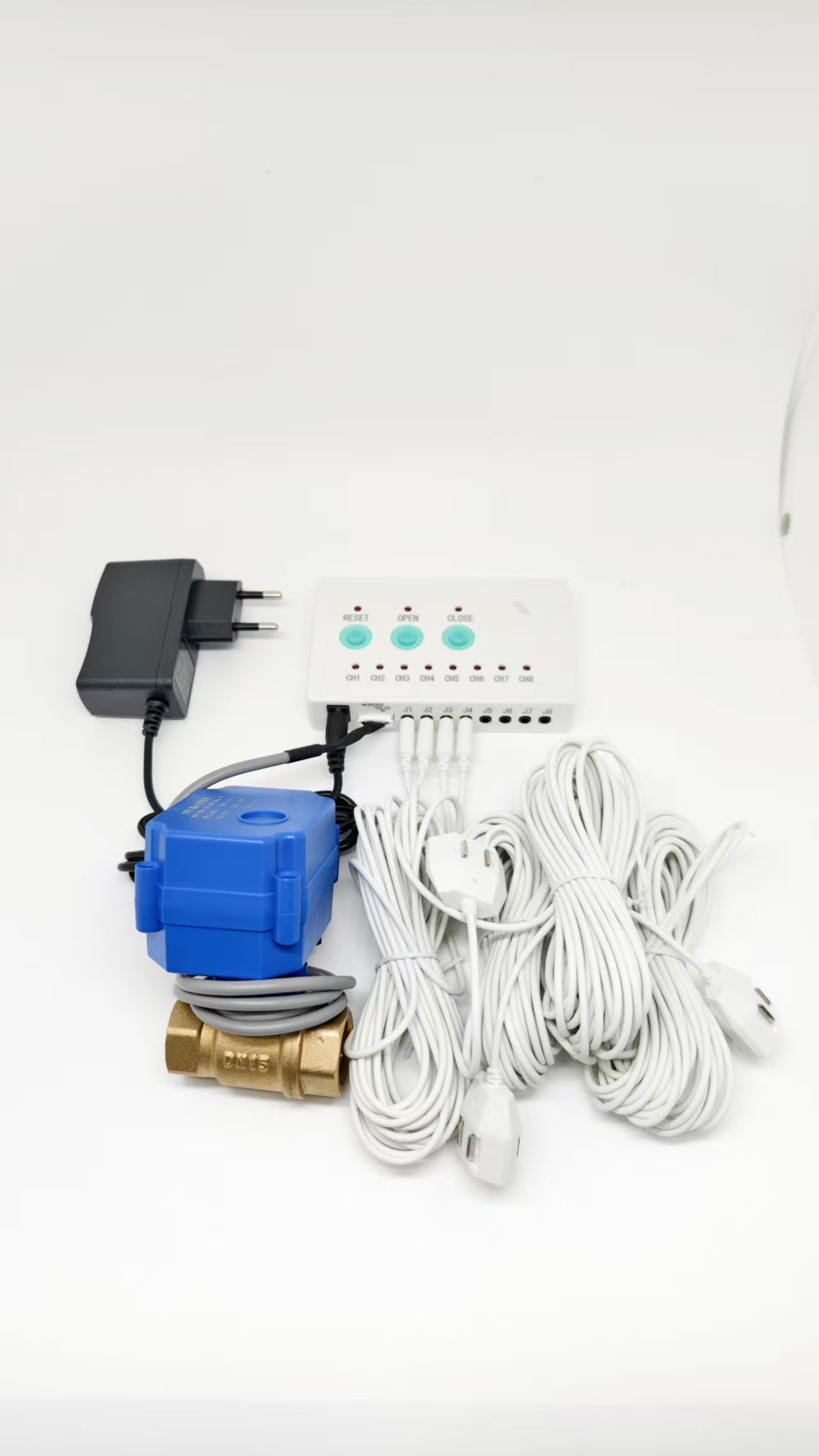
The Wired WLD series outputs an N.O./N.C. relay dry contact. A dry contact is potential-free, which means the sensor does not inject voltage into the building management system; it simply opens or closes a circuit that the BMS supplies. That is the standard way to bring a third-party alarm into a PLC or DDC alarm input loop without creating ground loops or signal conflicts.
The dual N.O./N.C. configuration matters because different controllers expect different logic. Some alarm panels are wired normally-open and trigger on closure. Others supervise a normally-closed loop and treat an open circuit as the alarm state. Having both contact forms available on the same sensor means one part number can be commissioned into either architecture without rewiring the panel.
Typical downstream connections for a wired leak sensor include the alarm panel, the BMS or DCS supervisory layer, and building intercom or notification systems. In a data center, the sensor is normally mapped to a specific zone in the BMS so that the alarm text identifies the location rather than simply reporting a generic water fault.
3. Closing the loop with an external motorized ball valve
The wired leak sensor is a detection and signalling device. It does not contain a shutoff mechanism, which means the isolating valve is a separate upstream component. That separation is intentional: it lets the specifier choose a valve whose bore, voltage, torque, and enclosure rating match the actual pipe and environment, rather than accepting whatever was bundled into the sensor package.
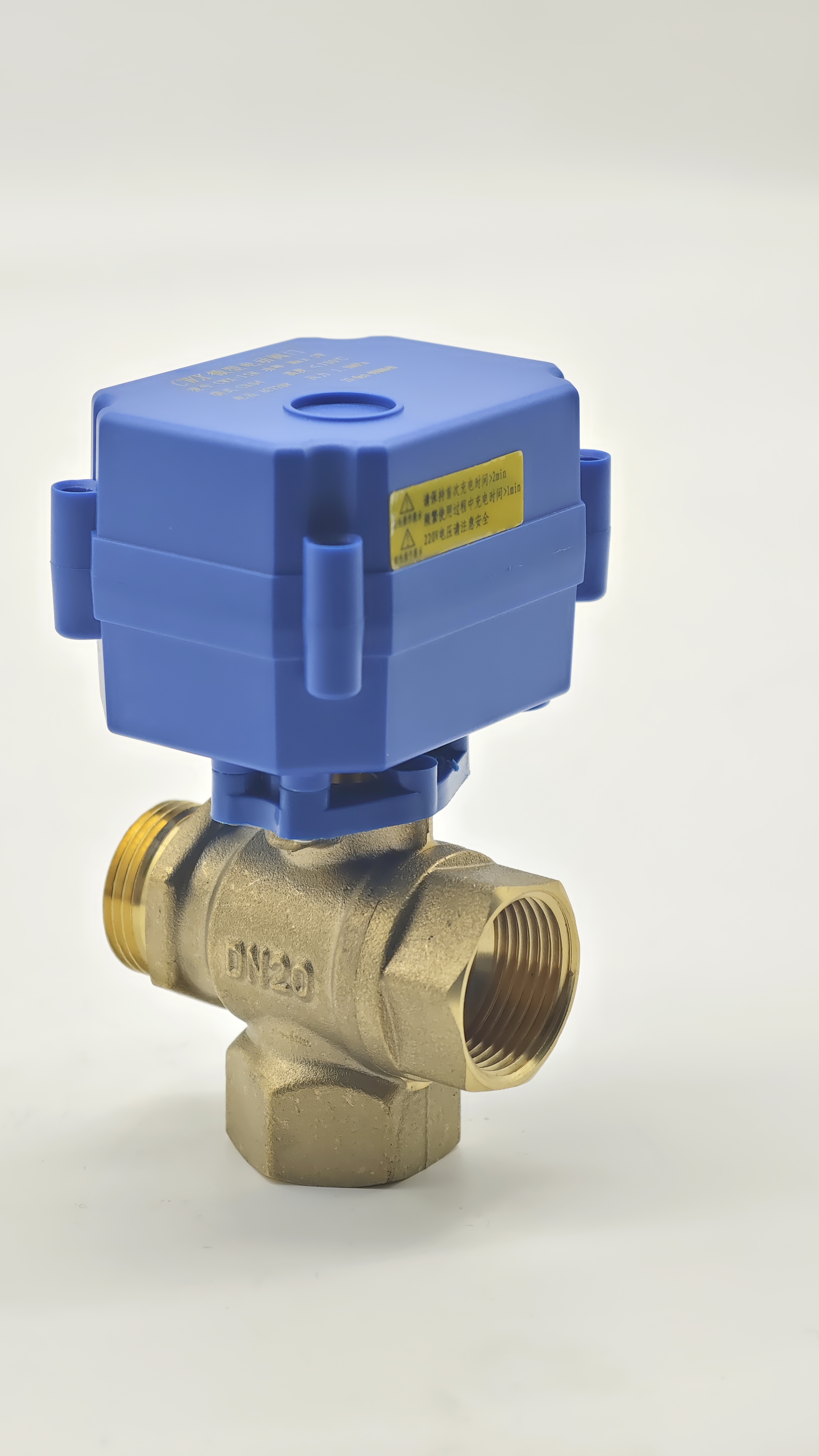
This is where the motorized ball valve becomes part of the leak protection system rather than a separate procurement item. Tianjin Tianfei High-tech Co. manufactures a range of motorized ball valves and motorized butterfly valves suited to this role, including the CWX-15N, CWX-20P, CTB, and CWX-60P families. A data center chilled-water branch might use the CWX-15N 2-way motorized ball valve, available from DN15 to DN50 with 3 N·m of torque, AC220V / DC12V / DC24V voltage options, IP65 protection, and normally-closed, normally-open, or hold control modes.
Where a larger branch or a main isolation point is involved, the CTB 2-way motorized ball valve covers DN15 to DN100 with 6 N·m of torque, IP67 protection, and an optional manual override lever for on-site operation during a power or controller failure. For higher-torque or analog-modulating duties, the CWX-60P (2-Way) reaches DN100 with 20 N·m of torque, IP67 protection, and selectable on/off or modulating control using 0-10V or 4-20mA signals. Where the isolation point is on a large main, the CTB flanged motorized butterfly valve extends from DN50 to DN500 with 30-500 N·m of torque.
For smaller, self-contained leak protection points such as a server room subfloor drip tray or a kitchen and bathroom pipe run, the WLAV Water Leak Alarm Valve integrates both functions in one assembly: conductive sensing detects water, a buzzer sounds locally, and the unit simultaneously drives a motorized shutoff valve to cut the water supply. It operates on DC12V, covers DN15-DN25, and provides both buzzer and relay dry contact alarm outputs.
4. Sensor cable reach and multi-point coverage
Coverage is determined by cable length, not by the number of sensor heads alone. The Wired WLD ships with a standard 1 m sensing cable and supports extension up to 50 m, which allows a single sensor to trace a long perimeter path — the full edge of a raised floor, a pipe corridor, or a wall-to-wall subfloor run — instead of protecting only one point.
For larger rooms, the sensors are cascadable. Multiple Wired WLD units can be connected in parallel on the same alarm loop, so one control channel can supervise several zones simultaneously. Combined with the ABS housing and low unit cost, that architecture supports dense multi-point deployment, where the objective is not one sensor in the room but a sensor path along every credible water route.
Power is deliberately industrial. The sensor accepts DC12V or DC24V, which means it can be fed from the same low-voltage supply used by other field devices and does not require a dedicated mains circuit. The detection housing carries an IP44 rating, suitable for indoor subfloor, cabinet, and equipment-area installation.
Step-by-Step: Deploying Wired Leak Detection in a Critical Facility
The sequence below reflects how a wired conductive system is typically specified and commissioned. Each step produces a decision that the next step depends on, so working out of order usually results in either gaps in coverage or a detection signal that has nothing to act on.
- Map the water risk zones. Walk the room and record every credible water source and every path water would take if it escaped: chilled-water branches, condensate drains, humidifier lines, above-floor drainage, sprinkler zones, and any domestic water route crossing the space. Mark subfloor voids and cable entry points as zones in their own right.
- Decide the detection topology. Point detection suits a small number of high-value locations such as a drip tray under a single unit. Cable-path detection suits continuous exposure such as a raised-floor perimeter or a pipe corridor. Most data centers use both.
- Confirm the power and signal infrastructure. Verify that DC12V or DC24V is available at the sensor location, and confirm whether the receiving controller expects a normally-open or normally-closed input. The Wired WLD provides both N.O. and N.C. relay dry contacts, so the panel logic can be matched without additional interface hardware.
- Size the sensor cable run. Start from the 1 m standard cable and calculate the extension required to cover the intended path, up to a maximum of 50 m per sensor. Where the required path is longer, split it into multiple cascaded sensors on the same alarm loop rather than extending a single run beyond its limit.
- Select the shutoff valve. Match bore to the pipe size, voltage to the available supply, torque to the bore and differential pressure, and enclosure rating to the environment. IP65 covers most indoor plant and equipment areas; IP67 is the appropriate choice for wet, washdown, or partially exposed locations.
- Define the control logic in the BMS. Decide explicitly whether a leak alarm only notifies, or notifies and closes the valve. If it closes the valve, confirm the sequence with the mechanical team so that isolation does not unintentionally stop cooling to a live zone without an approved response procedure.
- Mount, test, and document. Place sensing cable along the floor or subfloor path rather than draped across equipment. Test each zone with a small amount of water at the far end of the cable run, verify the BMS point transitions, verify the valve stroke if shutoff is enabled, and record the zone-to-point mapping for the operations team.
Where Wired Leak Detection Fits Best
The Wired WLD sensor is specified for data centers, electrical rooms, under-equipment monitoring, and hotel or hospital floor monitoring. Those four environments share the same underlying condition: water is present by design, the consequences of undetected moisture are high, and the space is either unoccupied or difficult to inspect visually.
- Data center subfloor and raised-floor voids. Cooling pipework, condensate drainage, and cable pathways share the same void. A sensing cable run along the subfloor perimeter catches water close to its origin and before it reaches cable trays or grounding grids.
- Electrical rooms and switchgear areas. The risk is direct and immediate because energized equipment occupies the same floor plane. Detection here is usually paired with automatic isolation on the incoming water branch.
- Under factory equipment. Production machinery with water or coolant connections frequently sits on open floors where a slow leak spreads under adjacent equipment before it is visible from the aisle.
- Hotel and hospital floor monitoring. Multi-floor wet riser and bathroom clusters generate repeated low-level leak events. Cascaded sensors on a shared alarm loop keep the deployment economical across many rooms and floors.
- Server room subfloor with integrated shutoff. Where a compact, self-contained response is preferred, the WLAV Water Leak Alarm Valve combines conductive detection, a local buzzer, relay dry contact output, and an integrated motorized shutoff valve in DN15-DN25 sizes.
Across all of these, the sensor is typically deployed alongside a motorized ball valve or motorized butterfly valve that performs the physical isolation. Tianjin Tianfei High-tech Co. produces both layers — detection sensors and the intelligent valve actuators that act on their signal — which keeps the electrical interface and the mechanical shutoff coordinated within one supply chain.
Comparison: Choosing the Right Detection and Shutoff Configuration
The first table compares the three leak-related products covered in this guide on the parameters that determine where each one is deployed.
| Parameter | Wired WLD (Wired Water Leak Sensor) | Wireless WLD (Wireless Water Leak Sensor) | WLAV (Water Leak Alarm Valve) |
|---|---|---|---|
| Detection method | Conductive sensing | Conductive sensing | Conductive sensing |
| Power supply | DC12V / DC24V | 3 x AAA batteries (standby time > 1 year) | DC12V |
| Sensor cable | Standard 1 m (max. 50 m) | 1 m included | 1-5 m |
| Output | N.O./N.C. relay | Zigbee 3.0 / Z-Wave / WiFi | Buzzer + relay dry contact |
| Response time | < 3 seconds | - | < 3 seconds |
| Integral shutoff | No (requires external valve) | No (linkable to WiFi valve) | Yes (DN15-DN25) |
| IP rating | IP44 | IP44 | IP44 |
| Material | ABS / Brass | Brass / ABS | ABS / SS304 |
| Typical fit | Data centers, electrical rooms, equipment areas | Smart home, rental apartments, property management | Server room subfloor, home and office leak protection |
The second table covers the motorized ball valve and butterfly valve options that perform shutoff when a leak is confirmed.
| Model | Type | Voltage | Size range | Torque | IP rating | Control mode |
|---|---|---|---|---|---|---|
| CWX-15N | 2-way motorized ball valve | AC220V / DC12V / DC24V | DN15-DN50 | 3 N·m | IP65 | Normally-closed / open / hold |
| CWX-20P | 2-way motorized ball valve (brass) | AC220V / DC24V | DN20-DN50 | 5 N·m | IP65 | Normally-closed / open / hold |
| CTB | 2-way motorized ball valve with manual override | AC220V / DC24V | DN15-DN100 | 6 N·m | IP67 | On/Off & Modulating (optional) |
| CWX-60P (2-Way) | 2-way motorized ball valve (high torque) | AC220V / DC24V | DN15-DN100 | 20 N·m | IP67 | Modulating (0-10V / 4-20mA) or On/Off |
| CWX-60P (3-Way) | 3-way motorized ball valve (T/L port) | AC220V / DC24V | DN15-DN50 | 20 N·m | IP67 | T-port / L-port mixing and diverting |
| CTB (Flange) | Flanged motorized butterfly valve | AC220V / DC24V | DN50-DN500 | 30-500 N·m | IP67 | On/Off & Modulating (4-20mA) |
Two-way units such as the CWX-15N and CWX-20P are the standard choice for simple isolation on a branch serving a single room or equipment group. Three-way units such as the CWX-60P (3-Way) apply where water has to be diverted rather than simply stopped, for example in mixing or bypass arrangements. Flanged butterfly valves come into play at the large-bore end, where the isolation point sits on a main rather than a branch.

Frequently Asked Questions
Which standards and ratings should I reference when specifying leak detection in a critical facility?
Two categories of requirement apply. The first is the environmental rating of the hardware: the Wired WLD sensor housing is rated IP44, while the motorized ball valves used for shutoff range from IP65 (CWX-15N and CWX-20P) to IP67 (CTB and CWX-60P), so the valve rating should be matched to the moisture exposure at the installation point. The second is market compliance for the powered actuator: on the EU market, motorized valves must comply with CE marking under EN 60335-1 and RoHS 2.0 under IEC 62321. Note that these EU requirements apply to the motorized valve, not to the passive sensing element, so they should be written into the specification against the correct line item.
How much floor area can one wired leak sensor cover?
Coverage is defined by sensing cable length rather than by a fixed area figure. The Wired WLD ships with a standard 1 m sensing cable and supports extension up to a maximum of 50 m, which allows one sensor to trace a long continuous path such as a raised-floor perimeter or a pipe corridor. For larger rooms, the units are cascadable: multiple sensors can be connected in parallel on a single alarm loop, so one control channel can supervise several zones at once. In practice, coverage is determined during the risk-mapping step by following the routes water would actually take.
What drives the cost of a wired leak detection deployment?
The main cost variables are the number of detection zones, the total sensing cable length required per zone (up to 50 m per sensor), and whether the installation includes an automatic shutoff valve. The Wired WLD uses an ABS housing and is intended for low-cost, large-scale multi-point deployment, which makes dense coverage of a subfloor or equipment area economically practical. Adding shutoff capability introduces the valve as a second cost item, with price driven by bore size, body material, and enclosure rating rather than by the sensor itself.
Can I evaluate a sample before committing to a facility-wide rollout?
Yes. Evaluating a single Wired WLD sensor and a matched shutoff valve is the standard way to validate the installation approach before scaling — it lets your team confirm the cable routing, verify that the N.O./N.C. relay transitions are captured correctly by your BMS or DCS point list, and test the valve stroke under real supply conditions. Tianjin Tianfei High-tech Co. supports sample evaluation for facility and OEM projects; enquiry details are listed in the next-step section below.
How do we move from specification to a commissioned installation?
The transition happens in four stages. First, freeze the zone map and the cable path for each zone. Second, confirm the interface: DC12V or DC24V supply at the sensor, and whether the controller expects a normally-open or normally-closed contact — the Wired WLD provides both, so either panel logic can be accommodated. Third, fix the valve selection by bore, voltage, torque, and IP rating, and agree the BMS response logic with the mechanical team. Fourth, mount, wet-test each zone at the far end of the cable run, and record the zone-to-point mapping. Because the sensor and the valve come from the same manufacturer, the electrical interface between the two is defined before the site work begins.
Conclusion
Water leak protection in a server room or data center is a two-part problem. The first part is knowing that water has appeared — and the answer there is a wired conductive sensing system with a fast response, a relay output that integrates cleanly with a BMS or DCS, and enough cable reach to cover the actual water paths rather than a single point. The Wired WLD answers that part with a sub-3-second response time, N.O./N.C. relay output, DC12V/DC24V operation, and sensing cable runs up to 50 m.
The second part is doing something about it. A detection signal that only lights a screen leaves the water running. Pairing the sensor with an external motorized ball valve closes the loop, so that a detected leak triggers isolation of the affected branch before the volume of water becomes the problem. Choosing the valve by bore, voltage, torque, and IP rating — rather than accepting a fixed bundle — is what makes the closed loop reliable in a critical facility.
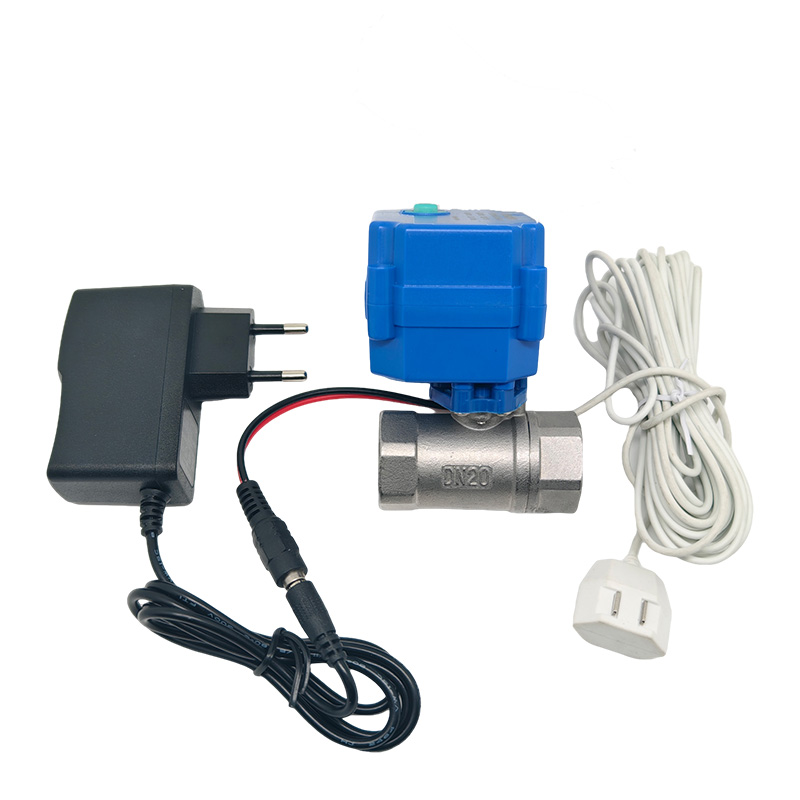
Specifying leak protection for a server room, electrical room, or subfloor zone? Tianjin Tianfei High-tech Co. supplies wired water leak sensors alongside the motorized ball valves that perform shutoff, so detection and isolation come from one coordinated source.
Request a sample or a quotation, or send us your zone map and pipe schedule for a configuration review.
Request a Sample or QuoteEmail: tf.co@tfjt.com | Tel: +86 022 85685296 | WhatsApp: +86 18920338351
Have Questions or Need More Details?
Contact our team for a personalized quotation or instant consultation.
Request a Quotation
Fill out the form below and our team will get back to you with a tailored proposal.
WhatsApp Direct Chat
Prefer to chat in real-time? Message us on WhatsApp for instant assistance & quick answers.
- Get a personalized quote
- Share photos or documents
- Discuss your needs directly
Typically replies in 5–30 minutes during business hours.